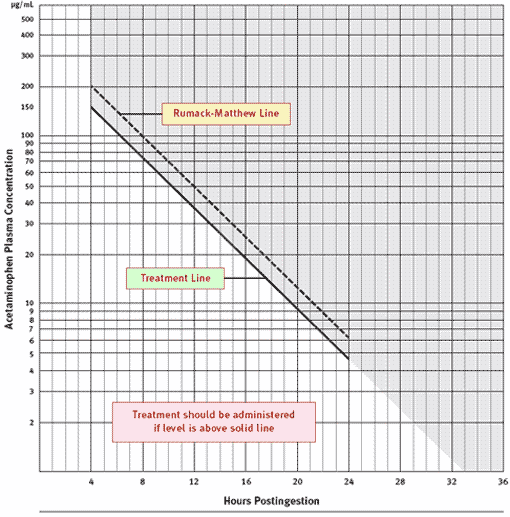
Well, if someone shows up with a tylenol OD to the ER, you get a level 4 or more hours post-ingestion, and plot the level and hours post-ingestion on a handy graph. Above the dark line on the graph? Welcome to the world of N-acetylcyteine, a disgusting compound typically administered with fruit juice, but still makes some people vomit. You give a loading dose of 150mg/kg followed by 70 mg/kg for 17 more doses. If you can't keep down the dose, it has to be repeated. During this time is when the psychiatrist is typically called to the ER to figure out whether it is safe to let the person go, or if it was a serious suicide attempt in need of further intervention. It is surprisingly easy to overdose on tylenol accidently, as acetaminophen is in a zillion over the counter medicines, plus perscription painkillers percocet and vicodin, etc. 4000 mg a day is the upper limit of "safe" (without alcohol) - you can get acute liver failure with as little as 7800 mg if you are unlucky.
The treatment is as simple as it is magical - possible fuliminant liver failure on one side, skipping out of the hospital doing just fine on the other. And the treatment has everything to do with the body's master antioxidant, glutathione. Seems that a metabolite of tylenol, NAPQI, kills liver cells like gangbusters. Glutathione can bind to it and render it harmless, but once you run out of glutathione, the leftover NAPQI does its nasty job. That's where N-acetylcysteine (NAC) comes in - it is a ready precursor to glutathione, so your liver can have a bountiful supply to fight off the NAPQI.
Well, have a look at the Wikipedia article. NAC is not only the treatment for mucus build-up in cystic fibrosis, but also acetaminophen overdose, perhaps to reduce the kidney toxicity of contrast dye (though that doesn't seem to be holding up), in interstitial lung disease, and investigationally in reduction of noise-induced hearing loss, lessening the destruction of pancreatic beta cells, curing a hangover, and decreasing symptoms of the flu. But of course I don't care about all that. As a specialist I am required by medical convention to stick to the brain and keep my little nose out of other parts of the body... but NAC has some interesting properties in the noggin as well.
As usual it all goes back to glutamate, the excitatory neurotransmitter of doom. In short, having too much glutamate around is to your neurons rather like whipping your horse to go and go and go until you kill it. Horses and brains need time at pasture, chilling out and eating appropriate foods, and sometimes a nice rubdown and brushing. Well, NAC seems to be able to get into some tricky areas of the brain and do some amazing management of glutamate. Over the past few years, a number of intriguing studies have come out using NAC alone or as adjunct treatment for some difficult psychiatric conditions. Some of these were decent multicenter randomized controlled trials. The real deal.
These tricky conditions? Trichotillomania (compulsive hair-pulling, which is both common and exceptionally difficult to treat - several decades of research has come up with nothing as effective as the NAC trial!). Schizophrenia. Bipolar Depression (another very difficult and disabling condition that doesn't respond particularly well to therapy or medicine). And there is an ongoing study on OCD. The studies vary between 2000-4800mg daily of the capsules (I'm assuming these are better tolerated than the emergency room drink), and in most of the studies, there were more adverse events and side effects in the placebo arm than in the treatment arm. Many of the studies were as long as 6 months, which is a lifetime for randomized controlled clinical trials, and all of the studies had positive effects. That is pretty astounding, considering how pharmaceutical companies have no doubt spent millions and millions chasing down bipolar depression, for example, without much to show for it (there's quetiapine, fluoxetine, and olanzapine+fluoxetine with modest effects). Another cute little study used NAC to reduce cocaine cravings - again, something for which there is really no effective FDA-approved medical treatment.
Why would a precursor for the master antioxidant have anything to do with glutamate in the brain? The mechanism is sort of hysterically complicated, so I'll quote the trichotillomania paper for fun:
[NAC] is a hepatoprotective antioxidant that is converted to cysteine, a substrate for the glutamate-cysteine antiporter. This antiporter allows for the uptake of cysteine, which causes the reverse transport of glutamate into the extracellular space, which stimulates inhibitory metabotropic glutamate receptors and, thereby, reduces synaptic release of glutamate. The restoration of the extracellular glutamate concentration in the nucleus accumbens seems to block reinstitution of compulsive behaviors.
Translating the sciencespeak: NAC helps excess (and toxic) glutamate stop being at the wrong place at the wrong time. It helps us put that brain out to pasture for some rest and recovery.
What are the downsides of NAC? I can think of two problems that might be biggies - first off, NAC is a mucolytic that thins mucus by cutting disulfide bonds. I suspect that might raise risks - one wouldn't want too little mucus. Mucus is important. Paul Jaminet mentions this issue and links a study here. Also, cutting disulfide bridges within the body is what that inflammatory baddie homocysteine is supposed to do, leading to crispy collagen and inelastic elastin in the arteries (which would possibly first show up as high blood pressure).
Of course, no hunter gatherer was chugging 2 grams of NAC daily. It's not evolutionary psychiatry. But it does seem to have the potential to replicate, perhaps with some downsides, the natural brain glutamate situation of a lower-stress life with plenty of appropriate minerals and micronutrients. Hey, maybe even absence of tons of carbs on top of an inflammatory rodent diet. Or some ketosis. We live a modern life - some brains are already tracking in the wrong direction. It would certainly be worth studying NAC further so we have more information, and, in my view, in intractable or otherwise untreatable conditions that significantly impair functioning, giving it a try.

is l glutamine the same as glutamate? b/c i have had nothing but good results with 5g of l glutamine occassionally
ReplyDeleteHi Mal - glutamine and glutamate are different amino acids, but one can turn into the other. However, glutamine is generally considered to be beneficial, whereas glutamate (glutamic acid) can be neurotoxic. It is also necessary for continued brain function! We need just enough in the right place at the right time.
ReplyDeletehttp://www.davidwheldon.co.uk/ms-treatment.html and http://www.davidwheldon.co.uk/NAC.html
ReplyDeleteAnother use for NAC
BC
I tend to think the EtOH-acetaminophen problem is frequently misunderstood, though admittedly it could be me that's in the wrong. I've come to understand that the problem occurs in chronic drinkers who take acetominophen in the absence of EtOH. CYP2E1 is induced by chronic alcohol consumption and plays a role in metabolizing the extra alcohol. It is also the enzyme responsible for breaking acetaminophen down into it's toxic metabolite... It has always seemed to me that the moral of the story is not that drinking EtOH acutely w/ your tylenol is bad, but that chronic drinkers should not abstain when they take tylenol (or probably shouldn't take tylenol at all, as it seems a bit risky to try and consume enough EtOH to keep CYP2E1 busy while acetaminophen does it's job)... If you're a chronic drinker and you abstain from booze when you take tylenol you have all that CYP2E1 sitting around and all you give it is tylenol to eat... idle hands and all that jazz. Of course telling your patients to drink with their drugs will probably get your license revoked...
ReplyDeleteOK- went looking for a reference I read a couple years ago discussing paracetamol use for dental procedures in an indigent (and frequently alcohol addicted) population... didn't find it, but did find this gem!
Diets with corn oil and/or low protein increase acute acetaminophen hepatotoxicity compared to diets with beef tallow in a rat model.
http://www.ncbi.nlm.nih.gov/pubmed/20016708
I wonder if nasty PUFAs induce CYP2E1... could be an interesting thing to look at in NAFLD!
Signing off- sorry my comment is so long!
Victoria - the Merck Manual stuff is all about the alcohol but you never quite know if that is convention or real biochem sometimes!
ReplyDeleteHey friends - Victoria, you said "I wonder if nasty PUFAs induce CYP2E1...", now I can't help wonder what's going on with CYP24A1, vitamin d and lung cancer. My brain is alight right now with the possibilities.
ReplyDeleteAnyway, about NAC. It seems reasonable to try if the potential treatment benefits to ocd, liver health, trichotillomania, bipolar (etc etc) outweigh the crispy collagen and inelastic elastin risks of using it. I mean, crispy collagen and inelastic elastin are quite serious issues for the vain. lol
All humor aside, it does seem like the potential benefit of NAC is huge for many people. Thanks for putting up yet another excellent post. Hope the sleep is coming along.
Katherine
@k1wuk: That is interesting and got me thinking. Still don't know what to make of the Candida angle, but the possible connection between Chlamydia Pneumoniae and MS seems a viable hypothesis.
ReplyDelete@Emily: I'm no expert (and I'm way out of my league here), but could you look at what if have pieced together so far from what I have read, and either poke holes into it or say if it is reasonable?
1. My underlying hypothesis would be that CFS/FM is a chronic/occult bacterial infection.
2. Elevated Lipoplysaccharide/LPS levels in the body lead to a "sickness behaviour" reaction of the person, malaise, lethargy, simply put the evolutionary aspect: withdrawal from the herd.
3. Occult/chronic infections by different bacteria (Chlamydia Pneumoniae, Coxiella Burnetii to name two) could all lead to the same sickness behaviour. Focusing on specific antibodies would lead many false negatives.
4. As the reaction is the same, there should be observable changes in the body that are the same in all CFS/ME cases (unless there are different "species" of CFS/ME, e.g. viral, leaky gut, etc.)
Look out for signs of bacterial infection, give antibiotics and see what happens. There is one doctor that did something similar with success 10 years ago: Chronic Chlamydia pneumoniae infection: a treatable cause of chronic fatigue syndrome. He found C. pneumoniae in 10 out of 171 patients with CFS.
Now I don't know if this is right (I haven't studied biology or medicine), but I would guess that Procalitonin/PCT would be a candidate if I wanted to look for an occult/chronic bacterial infection.
And here is the strange thing. Nobody seems to have checked Procalcitonin levels with regards to CFS. Huh?
Ok, there might be better markers (IL-6? TNFa? The other ILs? All known antibodies?) than Procalcitonin (or maybe other yet unknown markers), I'm no expert. But no one checked Procalcitonin? Seems strange. Or are my search terms wrong?
JKS Chia (the doctor I linked above) thinks that CFS is caused by Enteroviruses in the ... wait for it ... GUT!
ReplyDeleteGreeting!
Tony Mach
(some sort of google account mixup, blogger uses my old tmix account...)
ah, the tylenol. why do they always take the f ing tylenol. huge pain in my a$$. 1-2 a week sitting in my icu getting their NAC. they never do die of the liver failure, always the late phase intracranial hypertension or kidney failure from we still aren't sure what. thank goodness for the therapeutic hypothermia and nice machines to get people cold and keep them cold for 2-7 days. nothing like being 32C to keep your brain nice and cozy while everything else catches up.
ReplyDeletei f ing hate tylenol. in my mind it is one of the only drugs that should be prescription only. the shit is dangerous. The "recreational" overdoses are the really sad cases. you know, the 17 yo high scholl soccer player with the sore something who takes 6-8 tabs every 6 instead of 4 every 6 "since its just tylenol" then shows up with a totally dead liver, failed kidneys and cerebral edema but fails to survive long enough for a liver transplant to show up.
the intentional ODs never die in my experience.
Hi Dan! What we would always see were these kids who took a boatload of Tylenol pm because "I just wanted to sleep" - then they were treated to a charcoal shake and, if the 4 hr level high enough, the NAC of course. Didn't often end up in the unit. Just the benadryl would make you delirious and chasing little blue people around on the floor, and might do some weird things to the sympathetics for a while, but wouldn't make you quite so horribly sick. Of course you can't advise someone to stick to ODing on benadryl if you just want to sleep...
ReplyDeleteWhat I actually find remarkable are the opiate addicted I treat who have taken 20-30 percocet a day for years, yet the liver enzymes and bili don't budge.
Tony thanks for those links - I'm going to do a separate post
ReplyDeleteVlprince tweeted this this morning - I believe - copy/paste link to full text paper on tylenol and liver toxicity in rats - hastened by a high PUFA diet - beef tallow was protective:
ReplyDeletehttp://www.ncbi.nlm.nih.gov/pmc/articles/PMC2788177/?tool=pubmed
Dr. Burt Berkson has been using alpha-lipoic acid to prevent liver death--
ReplyDeletehttp://www.amazon.com/Alpha-Lipoic-Acid-Breakthrough-Antioxidant/dp/0761514570/ref=sr_1_1
Dr. Lester Packer claims that lipoic acid does a better job at boosting glutathione than NAC
http://www.amazon.com/Antioxidant-Miracle-Lipoic-Pycnogenol-Vitamins/dp/0471353116/ref=sr_1_5
What natural sources of NAC exist? And what of sub theraputic doses? It would seem cool to have a healthier alternative to mentally chill.
ReplyDeleteThe number of Mensans tempted to drink solely because of the need to reduce the rates of their thoughts or perhaps to slow the rate of thoughts negatively focused upon themselves almost has enough data to form a stereo type story.
Hi Emily. Thanks for the kind mention on the diet and violence post (fascinating insight by the way). Just came across this abstract for the IMFAR 2011 conference to be held in May, related to NAC use and autism. A small study but nevertheless double-blind, placebo-controlled, etc.
ReplyDeletehttp://imfar.confex.com/imfar/2011/webprogram/Paper9184.html
Interesting outcome.
Very interesting stuff. I have been taking 600mg NAC daily since August 1, around August 15 I started noticing a sudden increase in eye floaters which as I understand it are bits of vitreous collagen. A coincidence perhaps as this is a pretty low dose but now I'm a bit weary. Do you think NAC could crisp some collagen in a mere two weeks?
ReplyDeleteWhat particular brand of NAC would you recommend?
ReplyDeleteJarrow Pharmaceuticals has the highest quality controls in the industry. Solgar is good too.
DeleteSorry to come late to the party. I went to a complementary-medicine psychiatrist to get off my bipolar meds (which I have now done!), and one of the things he recommended was NAC. I took it for a few weeks but was very ill. Not headaches exactly, but my vision was off enough that I got dizzy whenever I had to change my focal distance. I had similar symptoms (but less bad) from high dose B-12 therapy. He couldn't explain it. Can you? Thanks!
ReplyDelete(PS: Count me as yet another one who improved by going from a vegetarian diet to a primal)
Just wondering how long u have to take nac 600 in order to see improvment in the liver enzyme count. My ggt is at 80 and i want the numbers to improve. Can anyone advise me on This situation.
ReplyDeleteHi,
ReplyDeleteI am using NAC to treat severe anxiety.I suffered from long time from depresssion but I am bi polar.I am trying Nac for the second day but I had to take them every 2 hours 1200 mg.Do you think the with time there will be an improvement?How long does Nac take to work.In my experience mood stabilisers and benzophianes (whatever the exact spelling) work almost right away while anti-depressants take more time.I am also taking acai berry with it(which I find very helpful).I seem to be suffering by severe anxiety + depresssion too as I cannot wake up in the morning (very low energy).After I wake up my brain starts thinking and thinking and cant stop then it gets tired.Nac is kind of stopping my brain from revving.I think that is why then I get tired as my brain is working as super speeds.I had a court case which lasting 6 years and I had a lot of fear.To make thinks works Igot injured and had to stop all my sportive activities which helped my anxiety.I am slowly back to normal.I would very much like your advice.Also can you mix it with L-theanine safely.As before I was using L-theanine with descreet results.NAc seems to be better but if I take too much I get hyper and it is hard to find a balance.So I took only one in the morning today.Seems that l-theanine and Nac works on too different calming agents,gaba and l glutamine which however are linked together.However it is strange because If I have too little I get anxious and if I have too much I get hyper and nervous like the original problem.I find it hard to understand why something which is supposed to calm you,if you take too much of it makes you nervous!I would very much be glad to have your opinion and help.
Hi,
ReplyDeleteJust a couple of days ago I realized that it is free glutamic acid in foods that triggers my symptoms of depression and OCD,I find it incredible that something you eat can influence your behaviour so strongly,
I wanted to take NAC, I suppose that I have too much glutamate in my brain, if eating foods with free glutamic acid is a problem, but then by coincidence I found this article about mercury detox and avoiding NAC if one has mercury poisoning,
http://www.livingnetwork.co.za/chelationnetwork/food/high-sulfur-sulphur-food-list/
What is your opinion on this theory by Dr. Cutler?
Must all mercury poisoned people avoid NAC and the foods/supplements he lists, or must only the people having elevated plasma cysteine levels avoid NAC?
Or do you disapprove of this theory?
I will receive fecal transplant treatments soon and hope that my free glutamate sensitivity will disappear, if not I might try a ketosis diet, I also read your article about ketosis and glutamate, that gave me some hope!
Would you recommend trying Riluzole also?
Thank you for a lot of interesting articles ;-)