I love twitter. And I'm nearing 10,000 tweets, which is probably diagnostic of something. But twitter is a great way to find articles and studies and things of interest tweeted by others with similar interests. And twitter is how I found this new study from Biological Psychiatry, A Randomized Controlled Pilot Trial of Oral N-Acetylcysteine in Children with Autism. Everyone go follow Cognitie. He's obviously intelligent and good-looking to boot, with lots of cool links and whatnot.
N-acetylcysteine is a supplement I've covered before, in Problems? I Have a NAC for That.
(Phoenix: Armistice. Right click to open in new tab)
A healthy brain is all about balance. One one side we have glutamate, which is the major excitatory neurotransmitter in the central nervous system. Think of glutamate as a charioteer with a whip forcing the horses in your noggin to GO GO GO. We're glad we have glutamate. Without glutamate we'd be dead. But the problem is, glutamate doesn't always know when to stop. That's why we have GABA, the major inhibitory neurotransmitter in the central nervous system. GABA is the groom who takes those horses out to pasture to munch on the green grass and rubs the horses down with a nice brush. In the right balance, you have a winning horse. With too much excitatory action you get a worn-out old nag.
In autistic spectrum disorders, there are a number of lines of evidence pointing to problems with the excitatory/inhibitory balance in the brain. There seem to be increases in expression of RNA for genes in the glutamate pathway, and there are certain genes having to do with the glutamate system that increase the risk for having autism. Glutamate is actually the precursor for GABA, and the enzyme that catalyzes the transformation from one to the other is glutamic acid decarboxylase. Both reduced levels of this enzyme and increased levels of glutamate have been reported in areas of the brain and spinal fluid in some children with autism.
In addition, as I noted in a previous blog post, autism symptoms may be a result of redox imbalance. That is, throughout the body, we have oxidants and antioxidants. We oxidize things to burn them in order to make energy, but we are left with "reactive oxygen species" as part of the burning process. Antioxidants go around and sop up the reactive oxygen species to prevent them from damaging and destabilizing proteins and fats and whatnot. Reactive oxygen species run amok can damage neurons and cause major brain problems.
We're used to thinking of "antioxidants" as vitamins such as C and E. However, the major antioxidants in the body are actually superoxide dismutase, catalase, and glutathione. The glutathione is one of the ways where NAC comes in, because as a supplement it is the best way to replenish gluathione in the liver and the rest of the body.*
(Animal Kingdom: Strange Attractor )
In the brain, the cysteine from N-acetylcysteine activates a glutamate-cysteine antiporter (a type of transporter in and out of a cell that exchanges cysteine for glutamate). Shoving glutamate into the extracellular space in the brain leads to downregulation of glutamate transmission in the central nervous system. So if you have too much glutamate whipping the brain, NAC seems like a mighty useful supplement to take. Therefore, if autism spectrum disorders (and other neurologic and psychiatric disorders) are a result of an excitatory:inhibitory imbalance, with overabundant excitation, NAC will bring the players more into balance.
At the same time, if autism spectrum disorders (and other neurologic and psychiatric disorders) are a result of redox imbalance, with reactive oxygen species terrorizing the delicate neurons, NAC will help the body make plenty of glutathione to help clean up those bad boys.
There's no single cause of austim, but NAC might be a way to kill several birds with one stone, as it were. AND, in the brain the two pathways (excitatory:inhibitory and redox) come together, as glutathione can displace glutamate at its receptor. Another win for NAC, it would seem.**
And, as noted in the excellent editorial in the same issue of Biological Psychiatry, Translating the Rosetta Stone of N-Acetylcysteine, these multiple effects may be why NAC has been shown to be efficacious in trials of so many psychiatric disorders. In the first paper I linked above, a small pilot trial, symptoms of irritability in autism were much improved in 5 kids, minimally improved in 6 kids, no change in 2, and one child got worse (though after the trial and on no NAC the subject had the same symptoms which were eventually found to be due to constipation). In the placebo group, two were much improved, five were minimally improved, five had no change, one was minimally worse, and one was much worse. Postive trials for NAC have also been reported for certain symptoms of schizophrenia, bipolar depression, cocaine craving, smoking cessation, trichotillomania, and gambling. What is also fairly remarkable is a lack of negative studies (established agents for all of these conditions have many negative studies.)
We still don't know if NAC is entirely safe (I wrote some theoretical problems with long-term use in my original blog article), and dietary supplements that aren't pharmaceutical grade might not be as reliable in dose, active ingredient, etc. as prescription medication. On the other hand, we know that prescription medicines aren't entirely safe, and in many cases, we know they have very considerable risks.
It would be nice to have some replication of these studies. As it stands, however, NAC has more of an evidence-base for use trichotillomania than any standard pharmaceutical.
Out of all the supplements, the ones that impress me the most are NAC and magnesium. NAC sure isn't "evolutionary psychiatry," but in this modern world of stress, poor sleep, and inflammatory food, beefing up the glutathione and taming the glutamate seems like a reasonable approach, particularly if you are having devastating symptoms (as in severe autistic disorders).
*Glutathione itself is poorly absorbed as a supplement, and is too large a molecule to be easily absorbed into the cells. Cysteine is the rate-limiting component of the reactions taking glutamate + cysteine to eventually make glutathione. Cysteine itself is not easily absorbed, but the acetylated form, N-acetylcysteine, is. Therefore, if you take n-acetylcysteine, you supply both a necessary precursor for glutathione and a nifty way to mop up excess glutamate. Win-win on that front.
**and another eek! for acetaminophen
Showing posts sorted by relevance for query glutamate. Sort by date Show all posts
Showing posts sorted by relevance for query glutamate. Sort by date Show all posts
Friday, June 1, 2012

Wednesday, March 2, 2011
Problems? I Have a NAC for That
In the comments of the Depression and Leaky Gut post, Tony Mach mentioned an interesting amino acid called N-acetylcysteine (we'll shorten that to NAC) and put up a link to the Wikipedia page "describing its wonders." I'd heard of NAC before, of course, as the punishment/savior for people who show up in the ER having overdosed on that most disgusting of things to overdose on, acetaminophen (Tylenol, or paracetamol). If you decide to down a whole bottle (or far, far less with alcohol - even the upper limits of a normal daily dose can damage your liver when combined with alcohol), you might feel sick immediately, but then perhaps recover and think nothing of it - until a few days later, when the accumulated killing of hepatocytes and rotten liver make you very very ill, and nothing short of a liver transplant will save you. Failing that, you die a rather horrible death. Livers are vital, we have no substitutes, no bypass machines, mechanical livers, or liver-like dialysis machines. Apparently there are 56,000 ER visits a year from tylenol overdoses in the US, and 100 deaths.
Well, if someone shows up with a tylenol OD to the ER, you get a level 4 or more hours post-ingestion, and plot the level and hours post-ingestion on a handy graph. Above the dark line on the graph? Welcome to the world of N-acetylcyteine, a disgusting compound typically administered with fruit juice, but still makes some people vomit. You give a loading dose of 150mg/kg followed by 70 mg/kg for 17 more doses. If you can't keep down the dose, it has to be repeated. During this time is when the psychiatrist is typically called to the ER to figure out whether it is safe to let the person go, or if it was a serious suicide attempt in need of further intervention. It is surprisingly easy to overdose on tylenol accidently, as acetaminophen is in a zillion over the counter medicines, plus perscription painkillers percocet and vicodin, etc. 4000 mg a day is the upper limit of "safe" (without alcohol) - you can get acute liver failure with as little as 7800 mg if you are unlucky.
The treatment is as simple as it is magical - possible fuliminant liver failure on one side, skipping out of the hospital doing just fine on the other. And the treatment has everything to do with the body's master antioxidant, glutathione. Seems that a metabolite of tylenol, NAPQI, kills liver cells like gangbusters. Glutathione can bind to it and render it harmless, but once you run out of glutathione, the leftover NAPQI does its nasty job. That's where N-acetylcysteine (NAC) comes in - it is a ready precursor to glutathione, so your liver can have a bountiful supply to fight off the NAPQI.
Well, have a look at the Wikipedia article. NAC is not only the treatment for mucus build-up in cystic fibrosis, but also acetaminophen overdose, perhaps to reduce the kidney toxicity of contrast dye (though that doesn't seem to be holding up), in interstitial lung disease, and investigationally in reduction of noise-induced hearing loss, lessening the destruction of pancreatic beta cells, curing a hangover, and decreasing symptoms of the flu. But of course I don't care about all that. As a specialist I am required by medical convention to stick to the brain and keep my little nose out of other parts of the body... but NAC has some interesting properties in the noggin as well.
As usual it all goes back to glutamate, the excitatory neurotransmitter of doom. In short, having too much glutamate around is to your neurons rather like whipping your horse to go and go and go until you kill it. Horses and brains need time at pasture, chilling out and eating appropriate foods, and sometimes a nice rubdown and brushing. Well, NAC seems to be able to get into some tricky areas of the brain and do some amazing management of glutamate. Over the past few years, a number of intriguing studies have come out using NAC alone or as adjunct treatment for some difficult psychiatric conditions. Some of these were decent multicenter randomized controlled trials. The real deal.
These tricky conditions? Trichotillomania (compulsive hair-pulling, which is both common and exceptionally difficult to treat - several decades of research has come up with nothing as effective as the NAC trial!). Schizophrenia. Bipolar Depression (another very difficult and disabling condition that doesn't respond particularly well to therapy or medicine). And there is an ongoing study on OCD. The studies vary between 2000-4800mg daily of the capsules (I'm assuming these are better tolerated than the emergency room drink), and in most of the studies, there were more adverse events and side effects in the placebo arm than in the treatment arm. Many of the studies were as long as 6 months, which is a lifetime for randomized controlled clinical trials, and all of the studies had positive effects. That is pretty astounding, considering how pharmaceutical companies have no doubt spent millions and millions chasing down bipolar depression, for example, without much to show for it (there's quetiapine, fluoxetine, and olanzapine+fluoxetine with modest effects). Another cute little study used NAC to reduce cocaine cravings - again, something for which there is really no effective FDA-approved medical treatment.
Why would a precursor for the master antioxidant have anything to do with glutamate in the brain? The mechanism is sort of hysterically complicated, so I'll quote the trichotillomania paper for fun:
Translating the sciencespeak: NAC helps excess (and toxic) glutamate stop being at the wrong place at the wrong time. It helps us put that brain out to pasture for some rest and recovery.
What are the downsides of NAC? I can think of two problems that might be biggies - first off, NAC is a mucolytic that thins mucus by cutting disulfide bonds. I suspect that might raise risks - one wouldn't want too little mucus. Mucus is important. Paul Jaminet mentions this issue and links a study here. Also, cutting disulfide bridges within the body is what that inflammatory baddie homocysteine is supposed to do, leading to crispy collagen and inelastic elastin in the arteries (which would possibly first show up as high blood pressure).
Of course, no hunter gatherer was chugging 2 grams of NAC daily. It's not evolutionary psychiatry. But it does seem to have the potential to replicate, perhaps with some downsides, the natural brain glutamate situation of a lower-stress life with plenty of appropriate minerals and micronutrients. Hey, maybe even absence of tons of carbs on top of an inflammatory rodent diet. Or some ketosis. We live a modern life - some brains are already tracking in the wrong direction. It would certainly be worth studying NAC further so we have more information, and, in my view, in intractable or otherwise untreatable conditions that significantly impair functioning, giving it a try.
Well, if someone shows up with a tylenol OD to the ER, you get a level 4 or more hours post-ingestion, and plot the level and hours post-ingestion on a handy graph. Above the dark line on the graph? Welcome to the world of N-acetylcyteine, a disgusting compound typically administered with fruit juice, but still makes some people vomit. You give a loading dose of 150mg/kg followed by 70 mg/kg for 17 more doses. If you can't keep down the dose, it has to be repeated. During this time is when the psychiatrist is typically called to the ER to figure out whether it is safe to let the person go, or if it was a serious suicide attempt in need of further intervention. It is surprisingly easy to overdose on tylenol accidently, as acetaminophen is in a zillion over the counter medicines, plus perscription painkillers percocet and vicodin, etc. 4000 mg a day is the upper limit of "safe" (without alcohol) - you can get acute liver failure with as little as 7800 mg if you are unlucky.
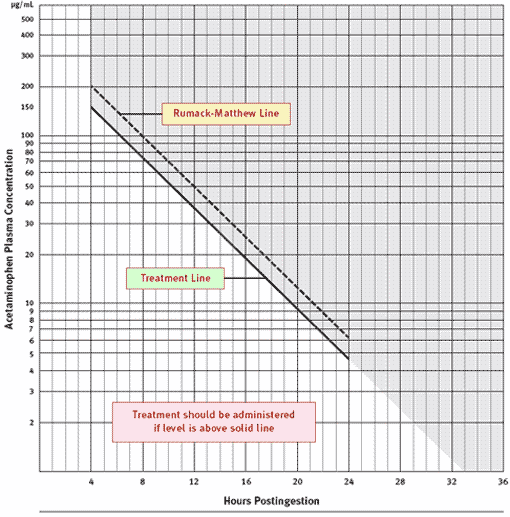
The treatment is as simple as it is magical - possible fuliminant liver failure on one side, skipping out of the hospital doing just fine on the other. And the treatment has everything to do with the body's master antioxidant, glutathione. Seems that a metabolite of tylenol, NAPQI, kills liver cells like gangbusters. Glutathione can bind to it and render it harmless, but once you run out of glutathione, the leftover NAPQI does its nasty job. That's where N-acetylcysteine (NAC) comes in - it is a ready precursor to glutathione, so your liver can have a bountiful supply to fight off the NAPQI.
Well, have a look at the Wikipedia article. NAC is not only the treatment for mucus build-up in cystic fibrosis, but also acetaminophen overdose, perhaps to reduce the kidney toxicity of contrast dye (though that doesn't seem to be holding up), in interstitial lung disease, and investigationally in reduction of noise-induced hearing loss, lessening the destruction of pancreatic beta cells, curing a hangover, and decreasing symptoms of the flu. But of course I don't care about all that. As a specialist I am required by medical convention to stick to the brain and keep my little nose out of other parts of the body... but NAC has some interesting properties in the noggin as well.
As usual it all goes back to glutamate, the excitatory neurotransmitter of doom. In short, having too much glutamate around is to your neurons rather like whipping your horse to go and go and go until you kill it. Horses and brains need time at pasture, chilling out and eating appropriate foods, and sometimes a nice rubdown and brushing. Well, NAC seems to be able to get into some tricky areas of the brain and do some amazing management of glutamate. Over the past few years, a number of intriguing studies have come out using NAC alone or as adjunct treatment for some difficult psychiatric conditions. Some of these were decent multicenter randomized controlled trials. The real deal.
These tricky conditions? Trichotillomania (compulsive hair-pulling, which is both common and exceptionally difficult to treat - several decades of research has come up with nothing as effective as the NAC trial!). Schizophrenia. Bipolar Depression (another very difficult and disabling condition that doesn't respond particularly well to therapy or medicine). And there is an ongoing study on OCD. The studies vary between 2000-4800mg daily of the capsules (I'm assuming these are better tolerated than the emergency room drink), and in most of the studies, there were more adverse events and side effects in the placebo arm than in the treatment arm. Many of the studies were as long as 6 months, which is a lifetime for randomized controlled clinical trials, and all of the studies had positive effects. That is pretty astounding, considering how pharmaceutical companies have no doubt spent millions and millions chasing down bipolar depression, for example, without much to show for it (there's quetiapine, fluoxetine, and olanzapine+fluoxetine with modest effects). Another cute little study used NAC to reduce cocaine cravings - again, something for which there is really no effective FDA-approved medical treatment.
Why would a precursor for the master antioxidant have anything to do with glutamate in the brain? The mechanism is sort of hysterically complicated, so I'll quote the trichotillomania paper for fun:
[NAC] is a hepatoprotective antioxidant that is converted to cysteine, a substrate for the glutamate-cysteine antiporter. This antiporter allows for the uptake of cysteine, which causes the reverse transport of glutamate into the extracellular space, which stimulates inhibitory metabotropic glutamate receptors and, thereby, reduces synaptic release of glutamate. The restoration of the extracellular glutamate concentration in the nucleus accumbens seems to block reinstitution of compulsive behaviors.
Translating the sciencespeak: NAC helps excess (and toxic) glutamate stop being at the wrong place at the wrong time. It helps us put that brain out to pasture for some rest and recovery.
What are the downsides of NAC? I can think of two problems that might be biggies - first off, NAC is a mucolytic that thins mucus by cutting disulfide bonds. I suspect that might raise risks - one wouldn't want too little mucus. Mucus is important. Paul Jaminet mentions this issue and links a study here. Also, cutting disulfide bridges within the body is what that inflammatory baddie homocysteine is supposed to do, leading to crispy collagen and inelastic elastin in the arteries (which would possibly first show up as high blood pressure).
Of course, no hunter gatherer was chugging 2 grams of NAC daily. It's not evolutionary psychiatry. But it does seem to have the potential to replicate, perhaps with some downsides, the natural brain glutamate situation of a lower-stress life with plenty of appropriate minerals and micronutrients. Hey, maybe even absence of tons of carbs on top of an inflammatory rodent diet. Or some ketosis. We live a modern life - some brains are already tracking in the wrong direction. It would certainly be worth studying NAC further so we have more information, and, in my view, in intractable or otherwise untreatable conditions that significantly impair functioning, giving it a try.
Monday, March 7, 2011
Low Cholesterol and Bipolar Disorder
I would say most cardiologists still believe that for cholesterol, the lower the better. In the diet, in the serum, in the liver, in the arteries. However, it is safe to say that super low cholesterol is not better in the brain. The dry weight of the brain is 60% fat and cholesterol is vital to synaptic function. Low cholesterol seems to be associated with Alzheimer's, suicide, and violent death. The association with depression is spurious. Turns out, however, that people with bipolar disorder also seem to have lower cholesterol - and that it gets lower during mixed manic episodes (a very uncomfortable combination of mania and depression that is particularly hard to treat), and also in manic episodes (1). As the mood swings remit, the cholesterol tends to get higher. And no one really knows why that is or what it means - is it some sort of biomarker of inflammation? Does the low cholesterol itself cause the problem? And yes, bipolar disorder (and depressive disorders) are associated with metabolic syndrome, but especially in bipolar disorder, the link to serum lipid alterations is much stronger to high triglycerides than high LDL or total serum cholesterol. Also interesting - depressed folks with high cholesterol are less likely to respond to antidepressants than folks with low cholesterol.
I've already discussed what low cholesterol can do to the serotonin receptors in Low Cholesterol and Suicide 2. Two different subtypes of serotonin receptor seem to be particularly affected, and as low serotonin is associated with violence and suicide (but not *necessarily* depression), it is intriguing that low cholesterol is associated with the same.
But in chasing down the original paper (2) that sparked this post (in the Journal of Clinical Psychiatry, which has the most user-unfriendly interface and I hate it when I have to find papers there), I came upon a meatier paper on mixed manic episodes, which led to a number of other neurotransmitter and brain stuff and cholesterol papers. From here on out the neurochemistry is a bit heavy, so strap in. Here's a nice Graffiti6 song, to make it all wash down easier (right click in new tab).
Big picture - most of the cholesterol we use in the brain is made in the brain. However, autopsy studies show us that cholesterol levels in the brain correlate to those in the rest of the body, and statins and cholesterol-lowering medicine that cross the blood brain barrier will likely have similar effects in the brain as they do in the liver - at least the work of Golomb seems to suggest this is the case.
So we know from the previous posts that we need cholesterol for proper myelination of nerve fibers (myelin is insulating for electrical conduction and also specially designed so that nerve signals run faster. Demyelination - then you have slow and fritzy conduction, and big problems, as in multiple sclerosis), and we know we need it for proper serotonin signaling. Not only are the 5HT1A and 5HT7 receptors particularly affected (serotonin = 5HT), but cholesterol also stabilizes the serotonin transporters. Cholesterol is a critical component of the "lipid rafts" through which a lot of membrane communication transpires.
In Low Cholesterol and Suicide 2, I also made a brief note that cholesterol may be involved in GABA and NMDA receptor signaling, opioid signaling, and the transport of excitatory amino acids. All those are a rather big deal when it comes down to the totality of how the brain signals information. So today I wanted to review that in a little more detail.
Glutamate (the excitatory amino acid in question) transport may be entirely altered by cholesterol depletion, at least in mice. It seems to affect the sodium powered transporter directly (3). I talk about glutamate a lot - in fact, last week I called it the excitatory neurotransmitter of doom. Almost every "paleo" intervention (such as ketosis, decreased inflammation, having enough nutrients like magnesium, proper sleep, meditation - which is not paleo, of course, but I feel emulates the necessary "being in the moment" that a hunter-gatherer would face hunting, gathering, collecting, building, etc.) - seems to modulate glutamate in a way that is favorable for neuron plasticity and repair. The SAD and stressful modern life promote glutamate excess, which will tend to cause neurotoxicity and eventually neuron death. Oops. Having glutamate work for you instead of against you is all about energy and having the right machinery to send glutamate through the transporter at the right place and the right time - so skunking those transporters by depleting them of cholesterol seems like a crazy bad idea.
One of the places glutamate acts is at the NMDA receptor. Turns out the NMDA receptor itself needs to be rich in cholesterol to do its work. (5)(6) If the NMDA receptor is depleted of cholesterol, there is a potential that it may fire differently, irregardless of the amount of glutamate out there.
And then there is GABA, who is rather like the Glenda the Good Witch compared to glutamate's Wicked Witch of the West. GABA transmission is relaxing. Literally like a nice glass of wine (which affects the GABA receptors). Yoga seems to increase GABA in key areas. Well, cholesterol depletion decreases GABA transmission too (4) (which it seems, in rats at least, that both depletion and major excess of cholesterol will do. So not too high (250% of normal) and not too low (56% of normal in this rat study) Low GABA signaling = anxiety, irritability, and sleep problems (symptoms associated with statin and cholesterol lowering drugs according to Golomb). These symptoms will also be prominent in a mixed manic episode (we did start today with bipolar disorder, after all).
Finally, there is opiate. Good old opiate. Opiate receptors (not surprisingly) along with dopamine are involved in the reward system of the brain. There are several varieties of opiate receptors, but the delta receptor is associated with mood effects (7). This subject is very complicated and I'd rather conquer it in a few more posts, but the short version is that cholesterol depletion seems to reduce the signaling capability of the delta opiate receptor in neuronal cells. This could, of course, presumably affect mood.
That's it for now. And perhaps it is not surprising that cholesterol, in a part of the body absolutely brimming with it, will have explicit effects on nearly every signaling pathway you ever heard of. Which is why I get a little bit perturbed when you realize that in many statin studies, people with psychiatric illness were excluded. People with mental illness make up a rather large percentage of the population (NIMH says 26.2% of adults in the US in any given year (8)). What happens when you take a brain that is already firing a little off, and deplete it of cholesterol? Gosh, it sure would be nice to know before we recommend statins for large percentages of the population. Oh, wait, it seems we've already done that...
To be fair, there was a large analysis of statin trials looking for new onset mental illness perhaps caused by statins, not finding it to be the case (9) - though they acknowledge that dietary interventions lowering cholesterol and non-statin drugs did cause issues, suggesting that, yes, indeed, cholesterol is important in the brain, and perhaps the magical anti-inflammatory effect of statins is once again the only thing that saves them from just being plain old harmful to everyone. And, again, many of those trials excluded people with previous psychiatric illness. Questions, questions, questions.
I've already discussed what low cholesterol can do to the serotonin receptors in Low Cholesterol and Suicide 2. Two different subtypes of serotonin receptor seem to be particularly affected, and as low serotonin is associated with violence and suicide (but not *necessarily* depression), it is intriguing that low cholesterol is associated with the same.
But in chasing down the original paper (2) that sparked this post (in the Journal of Clinical Psychiatry, which has the most user-unfriendly interface and I hate it when I have to find papers there), I came upon a meatier paper on mixed manic episodes, which led to a number of other neurotransmitter and brain stuff and cholesterol papers. From here on out the neurochemistry is a bit heavy, so strap in. Here's a nice Graffiti6 song, to make it all wash down easier (right click in new tab).
Big picture - most of the cholesterol we use in the brain is made in the brain. However, autopsy studies show us that cholesterol levels in the brain correlate to those in the rest of the body, and statins and cholesterol-lowering medicine that cross the blood brain barrier will likely have similar effects in the brain as they do in the liver - at least the work of Golomb seems to suggest this is the case.
So we know from the previous posts that we need cholesterol for proper myelination of nerve fibers (myelin is insulating for electrical conduction and also specially designed so that nerve signals run faster. Demyelination - then you have slow and fritzy conduction, and big problems, as in multiple sclerosis), and we know we need it for proper serotonin signaling. Not only are the 5HT1A and 5HT7 receptors particularly affected (serotonin = 5HT), but cholesterol also stabilizes the serotonin transporters. Cholesterol is a critical component of the "lipid rafts" through which a lot of membrane communication transpires.
In Low Cholesterol and Suicide 2, I also made a brief note that cholesterol may be involved in GABA and NMDA receptor signaling, opioid signaling, and the transport of excitatory amino acids. All those are a rather big deal when it comes down to the totality of how the brain signals information. So today I wanted to review that in a little more detail.
Glutamate (the excitatory amino acid in question) transport may be entirely altered by cholesterol depletion, at least in mice. It seems to affect the sodium powered transporter directly (3). I talk about glutamate a lot - in fact, last week I called it the excitatory neurotransmitter of doom. Almost every "paleo" intervention (such as ketosis, decreased inflammation, having enough nutrients like magnesium, proper sleep, meditation - which is not paleo, of course, but I feel emulates the necessary "being in the moment" that a hunter-gatherer would face hunting, gathering, collecting, building, etc.) - seems to modulate glutamate in a way that is favorable for neuron plasticity and repair. The SAD and stressful modern life promote glutamate excess, which will tend to cause neurotoxicity and eventually neuron death. Oops. Having glutamate work for you instead of against you is all about energy and having the right machinery to send glutamate through the transporter at the right place and the right time - so skunking those transporters by depleting them of cholesterol seems like a crazy bad idea.
One of the places glutamate acts is at the NMDA receptor. Turns out the NMDA receptor itself needs to be rich in cholesterol to do its work. (5)(6) If the NMDA receptor is depleted of cholesterol, there is a potential that it may fire differently, irregardless of the amount of glutamate out there.
And then there is GABA, who is rather like the Glenda the Good Witch compared to glutamate's Wicked Witch of the West. GABA transmission is relaxing. Literally like a nice glass of wine (which affects the GABA receptors). Yoga seems to increase GABA in key areas. Well, cholesterol depletion decreases GABA transmission too (4) (which it seems, in rats at least, that both depletion and major excess of cholesterol will do. So not too high (250% of normal) and not too low (56% of normal in this rat study) Low GABA signaling = anxiety, irritability, and sleep problems (symptoms associated with statin and cholesterol lowering drugs according to Golomb). These symptoms will also be prominent in a mixed manic episode (we did start today with bipolar disorder, after all).
Finally, there is opiate. Good old opiate. Opiate receptors (not surprisingly) along with dopamine are involved in the reward system of the brain. There are several varieties of opiate receptors, but the delta receptor is associated with mood effects (7). This subject is very complicated and I'd rather conquer it in a few more posts, but the short version is that cholesterol depletion seems to reduce the signaling capability of the delta opiate receptor in neuronal cells. This could, of course, presumably affect mood.
That's it for now. And perhaps it is not surprising that cholesterol, in a part of the body absolutely brimming with it, will have explicit effects on nearly every signaling pathway you ever heard of. Which is why I get a little bit perturbed when you realize that in many statin studies, people with psychiatric illness were excluded. People with mental illness make up a rather large percentage of the population (NIMH says 26.2% of adults in the US in any given year (8)). What happens when you take a brain that is already firing a little off, and deplete it of cholesterol? Gosh, it sure would be nice to know before we recommend statins for large percentages of the population. Oh, wait, it seems we've already done that...
To be fair, there was a large analysis of statin trials looking for new onset mental illness perhaps caused by statins, not finding it to be the case (9) - though they acknowledge that dietary interventions lowering cholesterol and non-statin drugs did cause issues, suggesting that, yes, indeed, cholesterol is important in the brain, and perhaps the magical anti-inflammatory effect of statins is once again the only thing that saves them from just being plain old harmful to everyone. And, again, many of those trials excluded people with previous psychiatric illness. Questions, questions, questions.
Wednesday, September 1, 2010
Migraines and Neurotoxicity
Jamie Scott sent me a link a couple days ago to this science daily article:
First Genetic Link to Common Migraine Exposed
So I chased down the study, as the article mentions some of my favorite words, glutamate and synapse. And it is a cool study! You've got to love the large, population based genetic studies they can do now, because they get p values (which is (sort of*) the chance that the finding occurred by chance) of 5.38X10⁻⁹. After scouring the nutrition literature for a while, it has been nice to read up on neurologists and geneticists who are gleefully obsessive rather than the nutrition epidemiologists who try to play Jedi mind tricks. "Bran is good for you. Also whole wheat. You will eat bran! You will!" I mean, I expect a pharmaceutical company to try to con me a little. They're in it to win it, after all. Where's the fun in reading another drug trial except to find the underdosed competitor medicine or the fouled up control? But it's no fun when the nutritionists do it. Especially with my tax dollars. I'd rather have a iRobot 330 Scooba Floor-Washing Robot, really, with the money.
But back to the study! I'll just gush a little, because you can certainly go read the Science Daily article yourselves. These geneticists took DNA from 3,279 headache-afflicted people from very nice countries with socialized medicine and possibly no need to buy disability insurance where they feel cool about giving up DNA to the government. They also took DNA from 10,747 matched controls. Then they used magical DNA replication and reading machines to roll out the genes for all these people, to find which ones the migraine sufferers had in common, and the controls didn't. Turns out it there was only one (of significance). The minor allele A of marker rs1835740 (p=5.38X10⁻⁹).
Genes have been found for migraines before, but always in rare family clusters with somewhat bizarre ion channel issues, and none of those genes were ever found in a large number of average migraine sufferers (8% of men and 17% of women). So to find a gene by splashing everyone's DNA out on a big canvas and finding the pattern is pretty big news! The researchers did all sorts of cute tests involving geneticists' favorite words, like HapMap and ssSNPs ("snips"), and no matter how they spliced the data, the same gene (rs1835740) came out as the common migraine one (not in every headache sufferer, to be sure, but in many!)
This is where geneticists get the full thumbs up Awesome. They went out and recruited another 3,202 cases (including some from some different socialized medicine countries), and 40,062 more matched controls, and they did the analysis again. And found that the same gene was over-represented in the migraine group, this time with p=1.69X10⁻¹¹. Heh.
The punchline. rs1835740 is an area of a chromosome that has two genes for glutamate regulation. Yes, glutamate, that excitatory neurotransmitter that can be exceedingly annoying and cause all sorts of trouble (like seizures, bipolar disorder, depression, and migraines) when the regulation is out of whack. The actual gene they think is implicated is MTDH. MTDH is responsible for downregulating the major glutamate transporter in the brain.
The hypothesis of migraines is that too much glutamate is left out in the synapse, causing too much excitement in the wrong place at the wrong time, leading to spreading neurotoxic communication, head pain, sometimes aura - a migraine. Why would too much glutamate be left out in the synapse? Because some people appear to have inefficient pumping mechanisms to get it back into the cell. The glutamate transporter is one you need to be working tip top!
This is all indirect evidence, but it is sensible and very cool. Maybe your common migraines are due to this very gene and mechanism. Perhaps topamax or valproate or other GABA-influencing medicines could work to improve the headaches. Or you could actively work to reduce your stress so the glutamate isn't so prevalent. Or maybe even try a ketogenic diet. (not an FDA approved treatment for migraine - and I couldn't even find any case trials on pubmed, but I have heard of cases mentioned on the internet. I'll look harder) Intriguing!
* I've been called out - here's the precise definition of the p value -"In statistical hypothesis testing, the p-value is the probability of obtaining a test statistic at least as extreme as the one that was actually observed, assuming that the null hypothesis is true."
First Genetic Link to Common Migraine Exposed
So I chased down the study, as the article mentions some of my favorite words, glutamate and synapse. And it is a cool study! You've got to love the large, population based genetic studies they can do now, because they get p values (which is (sort of*) the chance that the finding occurred by chance) of 5.38X10⁻⁹. After scouring the nutrition literature for a while, it has been nice to read up on neurologists and geneticists who are gleefully obsessive rather than the nutrition epidemiologists who try to play Jedi mind tricks. "Bran is good for you. Also whole wheat. You will eat bran! You will!" I mean, I expect a pharmaceutical company to try to con me a little. They're in it to win it, after all. Where's the fun in reading another drug trial except to find the underdosed competitor medicine or the fouled up control? But it's no fun when the nutritionists do it. Especially with my tax dollars. I'd rather have a iRobot 330 Scooba Floor-Washing Robot, really, with the money.
But back to the study! I'll just gush a little, because you can certainly go read the Science Daily article yourselves. These geneticists took DNA from 3,279 headache-afflicted people from very nice countries with socialized medicine and possibly no need to buy disability insurance where they feel cool about giving up DNA to the government.
They also took DNA from 10,747 matched controls. Then they used magical DNA replication and reading machines to roll out the genes for all these people, to find which ones the migraine sufferers had in common, and the controls didn't. Turns out it there was only one (of significance). The minor allele A of marker rs1835740 (p=5.38X10⁻⁹).Genes have been found for migraines before, but always in rare family clusters with somewhat bizarre ion channel issues, and none of those genes were ever found in a large number of average migraine sufferers (8% of men and 17% of women). So to find a gene by splashing everyone's DNA out on a big canvas and finding the pattern is pretty big news! The researchers did all sorts of cute tests involving geneticists' favorite words, like HapMap and ssSNPs ("snips"), and no matter how they spliced the data, the same gene (rs1835740) came out as the common migraine one (not in every headache sufferer, to be sure, but in many!)
This is where geneticists get the full thumbs up Awesome. They went out and recruited another 3,202 cases (including some from some different socialized medicine countries), and 40,062 more matched controls, and they did the analysis again. And found that the same gene was over-represented in the migraine group, this time with p=1.69X10⁻¹¹. Heh.
The punchline. rs1835740 is an area of a chromosome that has two genes for glutamate regulation. Yes, glutamate, that excitatory neurotransmitter that can be exceedingly annoying and cause all sorts of trouble (like seizures, bipolar disorder, depression, and migraines) when the regulation is out of whack. The actual gene they think is implicated is MTDH. MTDH is responsible for downregulating the major glutamate transporter in the brain.
The hypothesis of migraines is that too much glutamate is left out in the synapse, causing too much excitement in the wrong place at the wrong time, leading to spreading neurotoxic communication, head pain, sometimes aura - a migraine. Why would too much glutamate be left out in the synapse? Because some people appear to have inefficient pumping mechanisms to get it back into the cell. The glutamate transporter is one you need to be working tip top!
This is all indirect evidence, but it is sensible and very cool. Maybe your common migraines are due to this very gene and mechanism. Perhaps topamax or valproate or other GABA-influencing medicines could work to improve the headaches. Or you could actively work to reduce your stress so the glutamate isn't so prevalent. Or maybe even try a ketogenic diet. (not an FDA approved treatment for migraine - and I couldn't even find any case trials on pubmed, but I have heard of cases mentioned on the internet. I'll look harder) Intriguing!
* I've been called out - here's the precise definition of the p value -"In statistical hypothesis testing, the p-value is the probability of obtaining a test statistic at least as extreme as the one that was actually observed, assuming that the null hypothesis is true."
Monday, August 30, 2010
Your Brain on Ketones
Ketogenic diets have been prescribed for seizures for a long time. The actual research diets used in the past were pretty dismal and seemed to involve drinking a lot of cream and eating a lot of mayonnaise. At Johns Hopkins, pediatric patients were admitted to the hospital for a 48 hour fast and then given eggnog (minus the rum and sugar, I'm guessing) until ketosis was achieved (usually took about 4 days). In addition, ketogenic diets were calorie restricted to just 75-90% of what would be considered a child's usual calorie intake, and often they were fluid-restricted too (1)! If we're talking soybean oil mayonnaise, you could see how someone could get into trouble with mineral deficiencies and liver problems pretty quickly.
To understand "dismal," some of the latest research showed that a "modified Atkins protocol" was just as good as the classic ketogenic diet, and so much more liberating, as the patients were allowed up to 10 grams of carbohydrates daily, and they didn't begin with the fast, and they weren't calorie restricted (2)(3). While the classic ketogenic diet was 4:1:1 fat to carbs to protein. If you use MCT oil for 50% of your calories (have to add it in slowly though to prevent vomiting, diarrhea, and cramping!), you could increase the carbohydrates and proteins to a 1.2:1:1 fat:carb:protein and still get the same numbers of magical ketones circulating. And while "MCT oil" sounds nice and yummy when it is gorgeous coconut milk, this MCT Oil 100% Pure 32 fl.oz doesn't look quite as appetizing, especially when that is going the be half of what you eat for the foreseeable future (4). You can see why researchers consider ketogenic diets (especially the original versions) to be extremely difficult and unappetizing (they were), whereas seasoned low-carbers (who have a bit of a different idea what a ketogenic diet is) will find that attitude ridiculous, especially when you compare a ketogenic diet to the side effects of some anti-epileptic medications.
So it looks like modified Atkins (very very low carb, but not zero carb) and a preponderance of MCT is the same, ketone-wise, for the brain as the classic cream-heavy ketogenic diet. And what does it mean to have a ketogenic brain? Before, we talked about protons, but now I'm going to examine neurotransmitters and brain energy more closely. Specifically, glutamate and GABA (5).
If you recall, GABA is the major inhibitory neurotransmitter in the mammalian nervous system. Turns out, GABA is made from glutamate, which just happens to be the major excitatory neurotransmitter. You need them both, but we seem to get into trouble when have too much glutamate. Too much excitement in the brain means neurotoxicity, the extreme manifestation of which is seizures. But neurological diseases as varied as depression, bipolar disorder, migraines, ALS, and dementia have all been linked in some way to neurotoxicity.
Glutamate has several fates, rather like our old buddy tryptophan. It can become GABA (inhibitory), or aspartate (excitatory and, in excess, neurotoxic). Ketogenic diets seem to favor glutamate becoming GABA rather than aspartate. No one knows exactly why, but part of the reason has to do with how ketones are metabolized, and how ketosis favors using acetate (acetoacetate is one of the ketone bodies, after all) for fuel. Acetate becomes glutamine, an essential precursor for GABA.
Here's the confusing part. A classic ketogenic diet had three major components which were thought to contribute to the anti-seizure effect. One, it was calorie restricted. Just calorie restricting epileptic monkeys (no matter what the macronutrient ratios) reduces seizure frequency (and increases longevity). Secondly, it was acidic, and the extra protons themselves could block proton-sensitive ion channels, or the ketone bodies or fats themselves could affect the neuron membranes, making them harder to excite. (For the biochem geeks out there, ketones or fats seem to affect ATP sensitive K+ ion channels, making hyperpolarization easier to maintain). Thirdly, it lowered glucose levels. And lower glucose is associated with a higher seizure threshold (that's good - once doesn't want to easily have a seizure!) and less neuronal excitability. Gads. Doesn't sound to me like glucose really is the preferred fuel for the brain after all.
And now let's really get down to the mitochondrial level. Mitochondria are the power plants of our cells, where all the energy is produced (as ATP). Now, when I was taught about biochemical fuel-burning, I was taught that glucose was "clean" and ketones were "smokey." That glucose was clearly the preferred fuel for our muscles for exercise and definitely the key fuel for the brain. Except here's the dirty little secret about glucose - when you look at the amount of garbage leftover in the mitochondria, it is actually less efficient to make ATP from glucose than it is to make ATP from ketone bodies! A more efficient energy supply makes it easier to restore membranes in the brain to their normal states after a depolarizing electrical energy spike occurs, and means that energy is produced with fewer destructive free radicals leftover.
Umph. What does it all mean? Well, in the brain, energy is everything. The brain needs a crapload of energy to keep all those membrane potentials maintained - to keep pushing sodium out of the cells and pulling potassium into the cells. In fact, the brain, which is only 2% of our body weight, uses 20% of our oxygen and 10% of our glucose stores just to keep running. (Some cells in our brain are actually too small (or have tendrils that are too small) to accommodate mitochondria (the power plants). In those places, we must use glucose itself (via glycolysis) to create ATP.) When we change the main fuel of the brain from glucose to ketones, we change amino acid handling. And that means we change the ratios of glutamate and GABA. The best responders to a ketogenic diet for epilepsy end up with the highest amount of GABA in the central nervous system.
One of the things the brain has to keep a tight rein on is the amount of glutamate hanging out in the synapse. Lots of glutamate in the synapse means brain injury, or seizures, or low level ongoing damaging excitotoxicity as you might see in depression. The brain is humming along, using energy like a madman. Even a little bit more efficient use of the energy makes it easier for the brain to pull the glutamate back into the cells. And that, my friends, is a good thing.
Let me put it this way. Breastmilk is high in fat. Newborns (should) spend a lot of time in ketosis, and are therefore ketoadapted. Being ketoadapted means that babies can more easily turn ketone bodies into acetyl-coA and into myelin. Ketosis helps babies construct and grow their brains. (Update - looked more into this specifically and it seems that babies are in mild ketosis, but very young babies seem to utilize lactate as a fuel in lieu of glucose also - some of these were rat studies, though - and the utilization of lactate also promotes the same use of acetyl-CoA and gives the neonates some of the advantages of ketoadaptation without being in heavy ketosis.)
We know (more or less) what all this means for epilepsy (and babies!). We don't precisely know what it means for everyone else, at least brain-wise. Ketosis occurs with carbohydrate restriction, MCT oil use, or fasting. Some people believe that being ketoadapted is the ideal - others will suggest that we can be more relaxed, and eat a mostly low sugar diet with a bit of intermittent fasting thrown in to give us periods of ketosis (though in general I don't recommend intermittent fasting for anyone with an eating disorder). Ketosis for the body means fat-burning (hip hip hooray!). For the brain, it means a lower seizure risk and a better environment for neuronal recovery and repair.
To understand "dismal," some of the latest research showed that a "modified Atkins protocol" was just as good as the classic ketogenic diet, and so much more liberating, as the patients were allowed up to 10 grams of carbohydrates daily, and they didn't begin with the fast, and they weren't calorie restricted (2)(3). While the classic ketogenic diet was 4:1:1 fat to carbs to protein. If you use MCT oil for 50% of your calories (have to add it in slowly though to prevent vomiting, diarrhea, and cramping!), you could increase the carbohydrates and proteins to a 1.2:1:1 fat:carb:protein and still get the same numbers of magical ketones circulating. And while "MCT oil" sounds nice and yummy when it is gorgeous coconut milk, this MCT Oil 100% Pure 32 fl.oz
doesn't look quite as appetizing, especially when that is going the be half of what you eat for the foreseeable future (4). You can see why researchers consider ketogenic diets (especially the original versions) to be extremely difficult and unappetizing (they were), whereas seasoned low-carbers (who have a bit of a different idea what a ketogenic diet is) will find that attitude ridiculous, especially when you compare a ketogenic diet to the side effects of some anti-epileptic medications. So it looks like modified Atkins (very very low carb, but not zero carb) and a preponderance of MCT is the same, ketone-wise, for the brain as the classic cream-heavy ketogenic diet. And what does it mean to have a ketogenic brain? Before, we talked about protons, but now I'm going to examine neurotransmitters and brain energy more closely. Specifically, glutamate and GABA (5).
If you recall, GABA is the major inhibitory neurotransmitter in the mammalian nervous system. Turns out, GABA is made from glutamate, which just happens to be the major excitatory neurotransmitter. You need them both, but we seem to get into trouble when have too much glutamate. Too much excitement in the brain means neurotoxicity, the extreme manifestation of which is seizures. But neurological diseases as varied as depression, bipolar disorder, migraines, ALS, and dementia have all been linked in some way to neurotoxicity.
Glutamate has several fates, rather like our old buddy tryptophan. It can become GABA (inhibitory), or aspartate (excitatory and, in excess, neurotoxic). Ketogenic diets seem to favor glutamate becoming GABA rather than aspartate. No one knows exactly why, but part of the reason has to do with how ketones are metabolized, and how ketosis favors using acetate (acetoacetate is one of the ketone bodies, after all) for fuel. Acetate becomes glutamine, an essential precursor for GABA.
Here's the confusing part. A classic ketogenic diet had three major components which were thought to contribute to the anti-seizure effect. One, it was calorie restricted. Just calorie restricting epileptic monkeys (no matter what the macronutrient ratios) reduces seizure frequency (and increases longevity). Secondly, it was acidic, and the extra protons themselves could block proton-sensitive ion channels, or the ketone bodies or fats themselves could affect the neuron membranes, making them harder to excite. (For the biochem geeks out there, ketones or fats seem to affect ATP sensitive K+ ion channels, making hyperpolarization easier to maintain). Thirdly, it lowered glucose levels. And lower glucose is associated with a higher seizure threshold (that's good - once doesn't want to easily have a seizure!) and less neuronal excitability. Gads. Doesn't sound to me like glucose really is the preferred fuel for the brain after all.
And now let's really get down to the mitochondrial level. Mitochondria are the power plants of our cells, where all the energy is produced (as ATP). Now, when I was taught about biochemical fuel-burning, I was taught that glucose was "clean" and ketones were "smokey." That glucose was clearly the preferred fuel for our muscles for exercise and definitely the key fuel for the brain. Except here's the dirty little secret about glucose - when you look at the amount of garbage leftover in the mitochondria, it is actually less efficient to make ATP from glucose than it is to make ATP from ketone bodies! A more efficient energy supply makes it easier to restore membranes in the brain to their normal states after a depolarizing electrical energy spike occurs, and means that energy is produced with fewer destructive free radicals leftover.
Umph. What does it all mean? Well, in the brain, energy is everything. The brain needs a crapload of energy to keep all those membrane potentials maintained - to keep pushing sodium out of the cells and pulling potassium into the cells. In fact, the brain, which is only 2% of our body weight, uses 20% of our oxygen and 10% of our glucose stores just to keep running. (Some cells in our brain are actually too small (or have tendrils that are too small) to accommodate mitochondria (the power plants). In those places, we must use glucose itself (via glycolysis) to create ATP.) When we change the main fuel of the brain from glucose to ketones, we change amino acid handling. And that means we change the ratios of glutamate and GABA. The best responders to a ketogenic diet for epilepsy end up with the highest amount of GABA in the central nervous system.
One of the things the brain has to keep a tight rein on is the amount of glutamate hanging out in the synapse. Lots of glutamate in the synapse means brain injury, or seizures, or low level ongoing damaging excitotoxicity as you might see in depression. The brain is humming along, using energy like a madman. Even a little bit more efficient use of the energy makes it easier for the brain to pull the glutamate back into the cells. And that, my friends, is a good thing.
Let me put it this way. Breastmilk is high in fat. Newborns (should) spend a lot of time in ketosis, and are therefore ketoadapted. Being ketoadapted means that babies can more easily turn ketone bodies into acetyl-coA and into myelin. Ketosis helps babies construct and grow their brains. (Update - looked more into this specifically and it seems that babies are in mild ketosis, but very young babies seem to utilize lactate as a fuel in lieu of glucose also - some of these were rat studies, though - and the utilization of lactate also promotes the same use of acetyl-CoA and gives the neonates some of the advantages of ketoadaptation without being in heavy ketosis.)
We know (more or less) what all this means for epilepsy (and babies!). We don't precisely know what it means for everyone else, at least brain-wise. Ketosis occurs with carbohydrate restriction, MCT oil use, or fasting. Some people believe that being ketoadapted is the ideal - others will suggest that we can be more relaxed, and eat a mostly low sugar diet with a bit of intermittent fasting thrown in to give us periods of ketosis (though in general I don't recommend intermittent fasting for anyone with an eating disorder). Ketosis for the body means fat-burning (hip hip hooray!). For the brain, it means a lower seizure risk and a better environment for neuronal recovery and repair.
Thursday, September 16, 2010
Borderline Personality Disorder and Glutamate
If you recall from Love and Opium, I discussed how borderline personality disorder possibly stems from attachment problems combined with temperamental sensitivity plus opiate receptor issues. And in other posts, I've discussed the basic idea that excess glutamate is Evil in our poor brains.
Well, a new article in the Archives of General Psychiatry brings it all together! Amazing what happens when you pay attention.
Let's review. Borderline Personality Disorder is a disruption of healthful coping skills, leading to impulsive behavior, inability to contain emotion properly, and difficulty controlling anger. This disorder affects 2% of the population and 20% of psychiatric inpatients, so chances are you know someone who suffers from it.
So is this all psychological, or are there actual neurological correlates in the brain? Yes, that is a silly question because OF COURSE there are neurological correlates in the brain. It comes down to dysregulation in the fronto-limbic network. The limbic region of the brain controls emotion, the frontal region is rather like the policeman in your head that tells you that your hysterical internal observations about your Aunt Gertie's Awful Hat are NOT appropriate to share at the present time and place. So if your fronto-limbinc network is out of whack, you can be impulsive, easily angered, and too sensitive.
So the Archives, in true form, goes into excruciating detail about all the fMRI and other imaging studies that have failed to show any conclusive correlations to borderline personality disorder. Don't worry! I want to keep my few dozen fans! So let's skip to the good stuff. Fronto-limbic function in borderline personality disorder was found to be especially dysregulated with respect to remembering "unresolved negative life events."
I've no doubt Kurt Harris, M.D. knows more about these types of imaging studies, but the next thing our intrepid borderline personality disorder researchers did was get a Proton Magnetic Resonance Spectroscopy (MRS) scan of their borderline patients. MRS apparently allows one to follow the metabolism of all sorts of interesting neurotransmitter characters, including glutamate, while the scanned subject is still alive and thinking.
Thirty female patients diagnosed with borderline personality disorder were scanned and tested alongside thirty female matched controls. And, not surprisingly, differences were found. Patients were higher with respect to anxiety, depression, impulsivity, and dissociation ("out of body" sorts of feelings, or numbness of response to intense emotions). And on the brain imaging studies, borderline patients had significantly higher amounts of glutamate (the excitatory, and, in excess, neurotoxic neurotransmitter) in the anterior cingulate cortex (ACC) than the controls. Since the ACC is the heart of our ability to contain our impulses, having too much glutamate on board could presumably short circuit our ability to restrain ourselves.
Abnormal levels of frontal glutamate have also been found in studies of depression, schizophrenia, and ADHD. And glutamate dysregulation has also been found to be a problem with dissociation symptoms in general. The difference is, insurance companies will pay when I record a diagnosis as major depression, schizophrenia, or ADHD (all considered "organic" disorders), whereas they might not if I made the mistake of coding a patients' primary problem as borderline personality disorder (considered "psychological" and not organic).
And men, if you are looking for male data here, you are a bit out of luck. Turns out all relevant MRS studies of borderline personality disorder have included only women.
Insurance companies - it is ALL organic. Psychology is expressed within the confines of the neurochemistry of the organism. And, eventually, all of it will have to be paid for, one way or another.
Well, a new article in the Archives of General Psychiatry brings it all together! Amazing what happens when you pay attention.
Let's review. Borderline Personality Disorder is a disruption of healthful coping skills, leading to impulsive behavior, inability to contain emotion properly, and difficulty controlling anger. This disorder affects 2% of the population and 20% of psychiatric inpatients, so chances are you know someone who suffers from it.
So is this all psychological, or are there actual neurological correlates in the brain? Yes, that is a silly question because OF COURSE there are neurological correlates in the brain. It comes down to dysregulation in the fronto-limbic network. The limbic region of the brain controls emotion, the frontal region is rather like the policeman in your head that tells you that your hysterical internal observations about your Aunt Gertie's Awful Hat are NOT appropriate to share at the present time and place. So if your fronto-limbinc network is out of whack, you can be impulsive, easily angered, and too sensitive.
So the Archives, in true form, goes into excruciating detail about all the fMRI and other imaging studies that have failed to show any conclusive correlations to borderline personality disorder. Don't worry! I want to keep my few dozen fans! So let's skip to the good stuff. Fronto-limbic function in borderline personality disorder was found to be especially dysregulated with respect to remembering "unresolved negative life events."
I've no doubt Kurt Harris, M.D. knows more about these types of imaging studies, but the next thing our intrepid borderline personality disorder researchers did was get a Proton Magnetic Resonance Spectroscopy (MRS) scan of their borderline patients. MRS apparently allows one to follow the metabolism of all sorts of interesting neurotransmitter characters, including glutamate, while the scanned subject is still alive and thinking.
Thirty female patients diagnosed with borderline personality disorder were scanned and tested alongside thirty female matched controls. And, not surprisingly, differences were found. Patients were higher with respect to anxiety, depression, impulsivity, and dissociation ("out of body" sorts of feelings, or numbness of response to intense emotions). And on the brain imaging studies, borderline patients had significantly higher amounts of glutamate (the excitatory, and, in excess, neurotoxic neurotransmitter) in the anterior cingulate cortex (ACC) than the controls. Since the ACC is the heart of our ability to contain our impulses, having too much glutamate on board could presumably short circuit our ability to restrain ourselves.
Abnormal levels of frontal glutamate have also been found in studies of depression, schizophrenia, and ADHD. And glutamate dysregulation has also been found to be a problem with dissociation symptoms in general. The difference is, insurance companies will pay when I record a diagnosis as major depression, schizophrenia, or ADHD (all considered "organic" disorders), whereas they might not if I made the mistake of coding a patients' primary problem as borderline personality disorder (considered "psychological" and not organic).
And men, if you are looking for male data here, you are a bit out of luck. Turns out all relevant MRS studies of borderline personality disorder have included only women.
Insurance companies - it is ALL organic. Psychology is expressed within the confines of the neurochemistry of the organism. And, eventually, all of it will have to be paid for, one way or another.
Tuesday, June 22, 2010
Depression 2 - Inflammation Boogaloo
It is well known that symptoms of clinical depression are likely mediated by inflammation in the brain. A number of lines of evidence support this idea, including that depressed people, old and young, have elevated levels of certain inflammatory proteins in the plasma and cerebrospinal fluid. Anti-inflammatory agents treat depression, and pharmacologic agents such as interferon-alpha, that cause depression, also lead to increases in the inflammatory proteins IL-6 and TNF-alpha. In addition, when someone who is depressed responds to antidepressant treatment, these same inflammation markers decrease (1). People with generalized inflammatory syndromes (such as acute viral illness, rheumatoid arthritis, insulin resistance, and cardiovascular disease) have higher rates of depression than the general population too. I also notice in my clinic that people who have had bone surgery tend to get depressed for a few weeks after the operation, more so than people who had other kinds of surgery. I always wonder if sawing through the bones releases an enormous wave of inflammatory cytokines.
There are several suspected mechanisms of how this inflammation leads to depression, many of them very cute. Here's one - the amino acid tryptophan is a precursor to Eli Lilly's second favorite neurotransmitter, serotonin*. Turns out that tryptophan is also the precursor to kynurenic. When the inflammatory cascade is activated, more tryptophan is made into kynurenic, which leaves less tryptophan around to make into Eli Lilly's second favorite neurotransmitter, serotonin. And everyone knows that without serotonin, we're unhappy (and angry). SSRIs work, in part, by undermining the effect of the inflammatory cytokines, pushing more tryptophan to be made into serotonin.
Here's another mechanism - inflammatory cytokines also interfere with the regulation of another neurotransmitter, glutamate. Glutamate is an excitatory neurotransmitter that, if left to go wild, can pound our NMDA receptors in the brain and wreak major havoc. No one wants overexcited NMDA receptors, and clinical depression is one among many nasty brain issues that can be caused by overexcitement. Astrocytes, little clean-up cells in the brain, are supposed to mop up excess glutamate to keep it from going nutso on the NMDA. Turns out inflammatory cytokines interfere with the clean-up process (2). The horse tranquilizer (and club drug) ketamine, when administered IV, can eliminate symptoms of severe depression pretty much immediately in some cases (do NOT try this at home) (3). Ketamine helps the astrocytes mop up glutamate, and it is assumed that this is how ketamine instantly cures depression. Unfortunately, the effects of ketamine don't last, otherwise it would be a nifty psychiatrist's tool, indeed.
Finally, inflammatory cytokines also push the brain from a general environment of happy "neuroplasticity" (mediated finally by our old friend, BDNF) towards an environment of neurotoxicity (sounds bad, and it is!).
In my post on vegetable oils, I made note of a popular theory that a relative imbalance between the consumption of anti-inflammatory omega 3 fatty acids (fish oil) and inflammatory omega 6 fatty acids (vegetable oil, such as corn oil) predisposes us to inflammation. The omega 6 fatty acids are the precursors for many of the nasty, depressing cytokines mentioned above (such as IL-6). Well, an absolute flurry of research has been done in this area in the last decade or so, because omega 3 fish oils would be a nifty, low side effect, cheap treatment for depression, if it worked. Some studies have been disappointing (4)(5). However, the largest study yet, hot off the presses, does show benefit (equal to a prescription antidepressant) for those who have depression, but not concurrent anxiety, at a daily dose of 150mg DHA and about 1000mg EPA. (DHA and EPA are fish oil omega 3 fatty acids).
Well, neat! But adding extra omega 3 is just one half of the omega 6/omega 3 balancing act. What if we decreased dietary omega 6 at the same time? Researchers looked at the blood levels and tissue levels of all the different kinds of fatty acid in this recent paper. Turns out that depressed people had higher amounts of omega-6 fatty acids, but the amounts of monounsaturated fats, saturated fats, and omega 3 fats were about the same between depressed and non-depressed individuals. (Other studies showed a decreased amount of omega 3 and an increased amount of omega 6 (6)).
As far as I know, there haven't been any major studies testing both a dietary decrease in omega 6 and supplementation with omega 3 for depression, but it would be an interesting intervention. Dr. Guyenet uses the work of Dr. Lands to make a case that reducing omega 6 PUFAs to less than 4% of calories would be a great way to reduce overall inflammation, and lots of Western disease. Hunter gatherers, such as the Kitavans, consume less than 1% of calories from omega 6 fatty acids. Right now, in the US, about 7% of our calories are omega 6 PUFAs.
In summary - inflammation is depressing! Fish oil may make it better, but avoiding corn/safflower/sunflower/soybean oil (theoretically) makes it all better still, and is the natural state for which we are evolved.
*Eli Lilly's favorite neurotransmitter is, of course, dopamine.
There are several suspected mechanisms of how this inflammation leads to depression, many of them very cute. Here's one - the amino acid tryptophan is a precursor to Eli Lilly's second favorite neurotransmitter, serotonin*. Turns out that tryptophan is also the precursor to kynurenic. When the inflammatory cascade is activated, more tryptophan is made into kynurenic, which leaves less tryptophan around to make into Eli Lilly's second favorite neurotransmitter, serotonin. And everyone knows that without serotonin, we're unhappy (and angry). SSRIs work, in part, by undermining the effect of the inflammatory cytokines, pushing more tryptophan to be made into serotonin.

Here's another mechanism - inflammatory cytokines also interfere with the regulation of another neurotransmitter, glutamate. Glutamate is an excitatory neurotransmitter that, if left to go wild, can pound our NMDA receptors in the brain and wreak major havoc. No one wants overexcited NMDA receptors, and clinical depression is one among many nasty brain issues that can be caused by overexcitement. Astrocytes, little clean-up cells in the brain, are supposed to mop up excess glutamate to keep it from going nutso on the NMDA. Turns out inflammatory cytokines interfere with the clean-up process (2). The horse tranquilizer (and club drug) ketamine, when administered IV, can eliminate symptoms of severe depression pretty much immediately in some cases (do NOT try this at home) (3). Ketamine helps the astrocytes mop up glutamate, and it is assumed that this is how ketamine instantly cures depression. Unfortunately, the effects of ketamine don't last, otherwise it would be a nifty psychiatrist's tool, indeed.
Finally, inflammatory cytokines also push the brain from a general environment of happy "neuroplasticity" (mediated finally by our old friend, BDNF) towards an environment of neurotoxicity (sounds bad, and it is!).

In my post on vegetable oils, I made note of a popular theory that a relative imbalance between the consumption of anti-inflammatory omega 3 fatty acids (fish oil) and inflammatory omega 6 fatty acids (vegetable oil, such as corn oil) predisposes us to inflammation. The omega 6 fatty acids are the precursors for many of the nasty, depressing cytokines mentioned above (such as IL-6). Well, an absolute flurry of research has been done in this area in the last decade or so, because omega 3 fish oils would be a nifty, low side effect, cheap treatment for depression, if it worked. Some studies have been disappointing (4)(5). However, the largest study yet, hot off the presses, does show benefit (equal to a prescription antidepressant) for those who have depression, but not concurrent anxiety, at a daily dose of 150mg DHA and about 1000mg EPA. (DHA and EPA are fish oil omega 3 fatty acids).
Well, neat! But adding extra omega 3 is just one half of the omega 6/omega 3 balancing act. What if we decreased dietary omega 6 at the same time? Researchers looked at the blood levels and tissue levels of all the different kinds of fatty acid in this recent paper. Turns out that depressed people had higher amounts of omega-6 fatty acids, but the amounts of monounsaturated fats, saturated fats, and omega 3 fats were about the same between depressed and non-depressed individuals. (Other studies showed a decreased amount of omega 3 and an increased amount of omega 6 (6)).
As far as I know, there haven't been any major studies testing both a dietary decrease in omega 6 and supplementation with omega 3 for depression, but it would be an interesting intervention. Dr. Guyenet uses the work of Dr. Lands to make a case that reducing omega 6 PUFAs to less than 4% of calories would be a great way to reduce overall inflammation, and lots of Western disease. Hunter gatherers, such as the Kitavans, consume less than 1% of calories from omega 6 fatty acids. Right now, in the US, about 7% of our calories are omega 6 PUFAs.
In summary - inflammation is depressing! Fish oil may make it better, but avoiding corn/safflower/sunflower/soybean oil (theoretically) makes it all better still, and is the natural state for which we are evolved.
*Eli Lilly's favorite neurotransmitter is, of course, dopamine.
Monday, January 31, 2011
Autism and Ketogenic Diets
I had forgotten that the good Dr. Su sent me a link to a dietary trial of ketogenic diets in kids with autism a few months ago. He reminded me of this himself when he quoted some comments I made in a recent blog post, but then "Paleo Guy" extraordinaire earned bonus margarita mixes for his machine by reminding me yet again and sending me a link to a complimentary paper that is an excellent review of ketosis in general.
I will get back to posting on sleep. It's just the continuing sleep deprivation I've been experiencing makes the reading of the sleep textbook a bit too painful. However, I'm committed to restoring good sleep hygiene habits and no more twitter at 3am. In addition, each little beastie now has an LED nightlight play toy thingie that switches off after 30 minutes. They get huggable freedom from fear of the dark, and we all get blessed nighttime blackness. Win win. We'll just ignore the shutting down of the melatonin with the 30 minutes of LED glow. It's better than leaving the hall light on all night.
Right. Dr. Su's paper. It is a study of 30 kids from Crete with autism who were placed on a ketogenic diet for 6 months in 1999. They went on a "John Radcliffe" version of a ketogenic diet, consisting of 30% medium chain triglyceride oil, 30% fresh cream, 11% saturated fat (oops! overshooting the USDA 2011 guidelines by a bit), 19% carbohydrates, and 10% protein along with vitamin and mineral supplements. The kids were placed on the diet in 4 week intervals, followed by 2 weeks of anything goes, so on and off. The kids' urine was tested with ketostix and their serum checked for beta hydroxybutyrate (a ketone) to measure the amount of ketosis. After 6 months, the diets were discontinued, and the kids were evaluated monthly for another 6 months.
At the beginning of the study, 2 of the 30 kids met criteria for mild autism, the rest were more severe. Interestingly enough the premise of the study was to presumably improve mitochondrial efficiency in the brain via ketosis (using ketone bodies as fuel rather than glucose). 11 years later a small study did in fact confirm that kids with autism often have problems with mitochondrial efficiency.
23 kids tolerated the diet beyond the initial 4 weeks, and of those, 5 more discontinued the diet due to lack of improvement during the first few cycles. Of the remaining 18 kids, two boys improved enough in symptoms to be taken out of the special school and placed in mainstream education. Overall the 18 ketogenic kids "presented with improvements in their social behavior and interactions, speech, cooperation, stereotypy, and... hyperactivity, which contributed significantly to their improvement in learning."
The kids who did not stay on the diet were the most severely affected by autism, and the ones who had the best response were ones most mildly affected. Another interesting fact from the study is that the kids maintained their improvements through the two week washout periods and in the 6 months after the study was over. None of the kids had any complications (such as poor weight gain or selenium deficiency) seen in other trials of ketogenic diets in kids with epilepsy.
Overall (using the original sample size of 30), 26.66% of the kids benefited significantly from the diet. The researchers also have a nice explanatory paragraph about the biochemistry of ketosis and how it favors the relaxing inhibitory neurotransmitter GABA over the excitatory, and in excess, neurotoxic glutamate:
"The increase of ketone bodies maintains the synaptosomal content of γ-aminobutyric acid (GABA) at a higher level, a phenomenon that may contribute to the beneficial effect of a ketogenic diet in children with epilepsy and perhaps children with autistic behavior. Other researchers, in an attempt to clarify the manner in which ketone bodies increase the synaptosomal content of GABA, showed that the metabolism of ketone bodies to acetyl coenyzme A results in a decrease of the pool of brain oxaloacetate, which is consumed in the citrate synthetase reaction. As less oxaloacetate is available for the aspartate aminotransferase reaction, thereby lowering the rate of glutamate transamination, more glutamate becomes accessible to the glutamate decarboxylase pathway, thus favoring the synthesis of GABA."
Couldn't have said it better myself!
Well, this wasn't a large study or a blinded study and there was no control, but for some kids, the improvement was exceptional, and ketosis didn't have to be strictly maintained. My personal preference is not to live in ketosis, but rather to dip in on occasion via 16 or 24 hour fasting and some very low carb breakfasts after overnight fasts. This study seems to suggest that dipping into ketosis can have benefit for brain energetics, though the kids went through a larger scale "dip" than I ever have.
And, once again, dietary therapies prove to be exceedingly beneficial for some, but won't do much of anything for others. It would be important for any parent of an autistic child to know that ahead of time before pinning one's hope on a ketogenic diet. On the other hand, autism is currently incurable, and a ketogenic diet seems like a nice weapon to have in the arsenal against this disease.
(Put in the links and fixed some of those bizarre sentence structures. I shouldn't be allowed to blog when sleep-deprived.)
Edited to add links to the rest of my posts on autism. I cover gluten-free diets, inflammation, mitochondria, vitamin D, theories about the pathology:
Diet and Autism1
Diet and Autism 2
Autism and Vitamin D
Autism 4 - Inflammation Speculation
Brain Efficiency, Pediatric Edition
Autism and Interpregnancy Interval
I will get back to posting on sleep. It's just the continuing sleep deprivation I've been experiencing makes the reading of the sleep textbook a bit too painful. However, I'm committed to restoring good sleep hygiene habits and no more twitter at 3am. In addition, each little beastie now has an LED nightlight play toy thingie that switches off after 30 minutes. They get huggable freedom from fear of the dark, and we all get blessed nighttime blackness. Win win. We'll just ignore the shutting down of the melatonin with the 30 minutes of LED glow. It's better than leaving the hall light on all night.
Right. Dr. Su's paper. It is a study of 30 kids from Crete with autism who were placed on a ketogenic diet for 6 months in 1999. They went on a "John Radcliffe" version of a ketogenic diet, consisting of 30% medium chain triglyceride oil, 30% fresh cream, 11% saturated fat (oops! overshooting the USDA 2011 guidelines by a bit), 19% carbohydrates, and 10% protein along with vitamin and mineral supplements. The kids were placed on the diet in 4 week intervals, followed by 2 weeks of anything goes, so on and off. The kids' urine was tested with ketostix and their serum checked for beta hydroxybutyrate (a ketone) to measure the amount of ketosis. After 6 months, the diets were discontinued, and the kids were evaluated monthly for another 6 months.
At the beginning of the study, 2 of the 30 kids met criteria for mild autism, the rest were more severe. Interestingly enough the premise of the study was to presumably improve mitochondrial efficiency in the brain via ketosis (using ketone bodies as fuel rather than glucose). 11 years later a small study did in fact confirm that kids with autism often have problems with mitochondrial efficiency.
23 kids tolerated the diet beyond the initial 4 weeks, and of those, 5 more discontinued the diet due to lack of improvement during the first few cycles. Of the remaining 18 kids, two boys improved enough in symptoms to be taken out of the special school and placed in mainstream education. Overall the 18 ketogenic kids "presented with improvements in their social behavior and interactions, speech, cooperation, stereotypy, and... hyperactivity, which contributed significantly to their improvement in learning."
The kids who did not stay on the diet were the most severely affected by autism, and the ones who had the best response were ones most mildly affected. Another interesting fact from the study is that the kids maintained their improvements through the two week washout periods and in the 6 months after the study was over. None of the kids had any complications (such as poor weight gain or selenium deficiency) seen in other trials of ketogenic diets in kids with epilepsy.
Overall (using the original sample size of 30), 26.66% of the kids benefited significantly from the diet. The researchers also have a nice explanatory paragraph about the biochemistry of ketosis and how it favors the relaxing inhibitory neurotransmitter GABA over the excitatory, and in excess, neurotoxic glutamate:
"The increase of ketone bodies maintains the synaptosomal content of γ-aminobutyric acid (GABA) at a higher level, a phenomenon that may contribute to the beneficial effect of a ketogenic diet in children with epilepsy and perhaps children with autistic behavior. Other researchers, in an attempt to clarify the manner in which ketone bodies increase the synaptosomal content of GABA, showed that the metabolism of ketone bodies to acetyl coenyzme A results in a decrease of the pool of brain oxaloacetate, which is consumed in the citrate synthetase reaction. As less oxaloacetate is available for the aspartate aminotransferase reaction, thereby lowering the rate of glutamate transamination, more glutamate becomes accessible to the glutamate decarboxylase pathway, thus favoring the synthesis of GABA."
Couldn't have said it better myself!
Well, this wasn't a large study or a blinded study and there was no control, but for some kids, the improvement was exceptional, and ketosis didn't have to be strictly maintained. My personal preference is not to live in ketosis, but rather to dip in on occasion via 16 or 24 hour fasting and some very low carb breakfasts after overnight fasts. This study seems to suggest that dipping into ketosis can have benefit for brain energetics, though the kids went through a larger scale "dip" than I ever have.
And, once again, dietary therapies prove to be exceedingly beneficial for some, but won't do much of anything for others. It would be important for any parent of an autistic child to know that ahead of time before pinning one's hope on a ketogenic diet. On the other hand, autism is currently incurable, and a ketogenic diet seems like a nice weapon to have in the arsenal against this disease.
(Put in the links and fixed some of those bizarre sentence structures. I shouldn't be allowed to blog when sleep-deprived.)
Edited to add links to the rest of my posts on autism. I cover gluten-free diets, inflammation, mitochondria, vitamin D, theories about the pathology:
Diet and Autism1
Diet and Autism 2
Autism and Vitamin D
Autism 4 - Inflammation Speculation
Brain Efficiency, Pediatric Edition
Autism and Interpregnancy Interval
Sunday, October 10, 2010
Blue Velvet
A little nubbin of a post tonight, mostly to get my brain churning about a topic that I need to do a bit more reading on. The Journal of Affective Disorders has a number of intriguing papers this month and next, one of them being "Association between inducible and neuronal nitric oxide synthase polymorphisms and recurrent depressive disorder."
What? Doesn't sound intriguing to you? I keep an eye out for nitric oxide in the literature. See, my pet (and as far as I know completely unproven) theory is that the strong link between insulin resistance and depression is not just in the inflammation of hyperglycemia, but also due to insulin resistance making the endothelium (inner cell layer) of blood vessels less responsive to nitric oxide. This can make one hypertensive and prevent men from getting erections (if that doesn't make men want to go low-carb, I'm not sure what would). But endothelial nitric oxide synthase (an enzyme that is part of the pathway that makes nitric oxide in the blood) is thought to be part of a larger neuroprotective and regenerative pathway that (in part) could explain the anti-depressant effects of exercise and meditation. This would imply that high blood sugar would be rather like anti-exercise (sloth) and anti-meditation (stress) neurochemically. Again, speculative but not entirely off the wall.
But of course it is never that simple. Anyone reading up on nitric oxide will figure out that in certain areas of the brain, too much nitric oxide is Bad News. It's pro-oxidant and pro-inflammatory. The authors of today's paper state, "we may conclude that NO may have beneficial and detrimental effects depending on its concentrations, location, source, and duration of exposure."
But don't despair. There are three different types (or isoforms) of the enzyme that churns out nitric oxide. They are inducible nitric oxide synthase, neuronal nitric oxide synthase, and endothelial nitric oxide synthase. We'll call them iNOS, nNOS, and eNOS. For the purposes of understanding a healthy brain, iNOS and nNOS are bad, while eNOS is good.
Just to add more excruciating detail to a familiar Evolutionary Psychiatry theme, glutamate binds the NMDA receptor, leading to a flux of calcium into the cell, activating nNOS (via calmodulin, biochem geeks!). In addition, inflammatory cytokines cause brain cells called astrocytes and microglia to make NO via iNOS. This increases glutamate release. So both iNOS and nNOS are part of the glutamate/NMDA/calcium excitotoxic neuron-killing inflammatory cycle of brain badness. This pathway is linked to depression, anxiety, parkinson's dementia, schizophrenia, and even non-psychiatric illnesses such as migraines and rheumatoid arthritis.
So the interesting thing from this paper is that the researchers checked the genetic make-up of 181 (caucasian european) people with recurrent depression (around 4 episodes on average over 8 years) and 149 non-depressed controls. They found that carriers of certain types of nitric oxide synthase genes were more likely to have resistant depression, and other types of nitric oxide synthase genes were protective against having depression. A similar but smaller study was done in Asians and didn't show a linkage.
I have more reading to do to see how this information falls into the overall evo-med scheme, especially the exercise and mindfulness side of things. And I'll link the paper and some of my pertinent previous posts sometime tomorrow - if you are reading Sunday night I'm on the iPad.
And I know it was nitrous oxide (N2O) not nitric oxide (NO) in Blue Velvet, but hey, I've got to get the random googlers somehow. And N2O might act by mimicking NO in the central nervous system. So chew on that for a bit. Time for bed!
What? Doesn't sound intriguing to you? I keep an eye out for nitric oxide in the literature. See, my pet (and as far as I know completely unproven) theory is that the strong link between insulin resistance and depression is not just in the inflammation of hyperglycemia, but also due to insulin resistance making the endothelium (inner cell layer) of blood vessels less responsive to nitric oxide. This can make one hypertensive and prevent men from getting erections (if that doesn't make men want to go low-carb, I'm not sure what would). But endothelial nitric oxide synthase (an enzyme that is part of the pathway that makes nitric oxide in the blood) is thought to be part of a larger neuroprotective and regenerative pathway that (in part) could explain the anti-depressant effects of exercise and meditation. This would imply that high blood sugar would be rather like anti-exercise (sloth) and anti-meditation (stress) neurochemically. Again, speculative but not entirely off the wall.
But of course it is never that simple. Anyone reading up on nitric oxide will figure out that in certain areas of the brain, too much nitric oxide is Bad News. It's pro-oxidant and pro-inflammatory. The authors of today's paper state, "we may conclude that NO may have beneficial and detrimental effects depending on its concentrations, location, source, and duration of exposure."
But don't despair. There are three different types (or isoforms) of the enzyme that churns out nitric oxide. They are inducible nitric oxide synthase, neuronal nitric oxide synthase, and endothelial nitric oxide synthase. We'll call them iNOS, nNOS, and eNOS. For the purposes of understanding a healthy brain, iNOS and nNOS are bad, while eNOS is good.
Just to add more excruciating detail to a familiar Evolutionary Psychiatry theme, glutamate binds the NMDA receptor, leading to a flux of calcium into the cell, activating nNOS (via calmodulin, biochem geeks!). In addition, inflammatory cytokines cause brain cells called astrocytes and microglia to make NO via iNOS. This increases glutamate release. So both iNOS and nNOS are part of the glutamate/NMDA/calcium excitotoxic neuron-killing inflammatory cycle of brain badness. This pathway is linked to depression, anxiety, parkinson's dementia, schizophrenia, and even non-psychiatric illnesses such as migraines and rheumatoid arthritis.
So the interesting thing from this paper is that the researchers checked the genetic make-up of 181 (caucasian european) people with recurrent depression (around 4 episodes on average over 8 years) and 149 non-depressed controls. They found that carriers of certain types of nitric oxide synthase genes were more likely to have resistant depression, and other types of nitric oxide synthase genes were protective against having depression. A similar but smaller study was done in Asians and didn't show a linkage.
I have more reading to do to see how this information falls into the overall evo-med scheme, especially the exercise and mindfulness side of things. And I'll link the paper and some of my pertinent previous posts sometime tomorrow - if you are reading Sunday night I'm on the iPad.
And I know it was nitrous oxide (N2O) not nitric oxide (NO) in Blue Velvet, but hey, I've got to get the random googlers somehow. And N2O might act by mimicking NO in the central nervous system. So chew on that for a bit. Time for bed!
Thursday, August 19, 2010
Stress is Metabolic Syndrome
In a previous post I described a little bit about the HPA axis. That's hypothalamic-pituitary-adrenal axis, or master glands of stress and how they rule the body and the world. In today's post I want to explore a little more about how stress affects our metabolism and our minds.
Just to review, we have a stress response system in case something dangerous happens. And it works great for that kind of situation - send out a wave of stress hormone, a grandmother can lift the car off the trapped toddler. We can run faster, have better stamina, bleed less. What actually happens is that glucocorticoids (cortisol) and epinephrine (adrenaline) are released from the adrenal glands, and these hormones have a wide variety of effects on the body - increasing our cardiovascular capacity, decreasing our immune function, and increasing our ability to mobilize energy. Our own personal temporary superhero juice.
Acute stress has effects in the brain, too (1). Glucocorticoids bind to receptors in particular regions of the brain that encode memory (the hippocampus and the amygdala), so that years later, we can often remember stressful events as if they happened yesterday. This mechanism is part of the basis of flashbacks for people with PTSD.
And then there's chronic stress. Exposure to adrenaline and cortisol on a chronic basis can have disastrous effects on the body and brain. It is thought to contribute to the pathology of cardiovascular disease, high blood pressure, the spreading of cancer, immune system problems, and type I and type II diabetes. Chronic stress is of course also thought to cause, in part, many anxiety disorders and depressive disorders.
Cushing's syndrome is a disease caused by excess cortisol. Imaging studies have shown that people with Cushing's syndrome have a shrunken hippocampus. People with PTSD, and depression also tend to have a shrunken hippocampus. As I've described before, the hippocampus is the epicenter of how depression is toxic to the brain.
It's hard to study neurochemical goings-on in the the brains of living people, as we have the tedious tendency to be using our brains (though sometimes it is not obvious). For that reason, animal models are often used for experiments to really find out what is going on in a depressed or anxious brain. And the typical way to induce depression in a rat, for example, is to expose it to stress. And sure enough, the rat will begin to have changes in weight, disrupted sleep cycles, altered HPA axis function, and neurological changes in the hippocampus and the amygdala. Lithium and some antidepressants seem to protect the brains from the stress in animal models, reducing the amount of neurological changes in the brains. Chronic stress also causes an increase in glutamate in rat brains, which is one of the mechanisms we explored in Depression 2 - Inflammation Boogaloo. Humans will have elevated glutamate in their spinal fluid if they have anxiety.
All right. Blah blah blah. Stress makes you depressed. News flash! But here's where it gets interesting. Because, turns out, people with diabetes have many of the same neurological and morphological changes in the brain as depressed and anxious people do. Hyperglycemia accelerates brain aging and causes irreversible neuron loss in the hippocampus.
Cortisol seems to cause insulin resistance not only in the muscles and liver (which most paleo-minded folks will be aware of), but also in the hippocampus. Diabetics with poor glucose control have elevated cortisol, too. It's all a disastrous circle of sugary hormonal bodily terror. In an insulin-sensitive person, increases in insulin levels cause our cells to whip out the GLUT4 transporter, so that glucose is sucked from the blood into the muscle and fat. Cortisol seems to wreck the function of the GLUT4 transporters to some extent, leaving increasing levels of glucose floating around in the blood. Once you have hyperglycemia, you begin to favor oxidation over antioxidation. In the brain, glutathione (supreme antioxidant) levels are decreased in the hippocampus, leading to the rule of toxic glutamate. The NMDA receptor seems to increase. Not favorable to a healthy state of mind. All these changes decrease synaptic plasticity and repair. Exercise, estrogen, and antidepressants seem to be protective against this effect.
Now let's talk about the insulin receptor itself. The cerebellum, hypothalamus, and hippocampus all have insulin receptors, and insulin itself seems to be involved in mood states and cognition. If someone is insulin-resistant, adding insulin will help a person think more clearly. Insulin sensitivity seems to be associated with appropriate movement of glucose transporters GLUT4 and GLUT8 in the hippocampus to the cell membrane and the endoplasmic reticulum. Jamie Scott had a recent post on the cognitive effects of insulin resistance and diabetes.
Okay. Well, none of these findings are a huge surprise. We knew stress was bad. We knew insulin resistance was bad. Experimental animal models show that pharmacological interventions can reverse or slow down some of the damage. But hey, wouldn't it be better to avoid the chronic stress and insulin resistance in the first place? Better for the brain, better for the body.
Modern life requires work before play. Productivity before relaxation. Ability to afford the time to exercise before one actually gets the time to exercise. Hey, that's life, but take it to the automaton extreme (and add processed food and partially hydrogenated fat), and it rots our brains and ruins our bodies. But we will spend and spend until we have no more credit left. We need to change some of the incentives out there. Chronic, expensive disease is on the back burner, and it will bankrupt us.
Just to review, we have a stress response system in case something dangerous happens. And it works great for that kind of situation - send out a wave of stress hormone, a grandmother can lift the car off the trapped toddler. We can run faster, have better stamina, bleed less. What actually happens is that glucocorticoids (cortisol) and epinephrine (adrenaline) are released from the adrenal glands, and these hormones have a wide variety of effects on the body - increasing our cardiovascular capacity, decreasing our immune function, and increasing our ability to mobilize energy. Our own personal temporary superhero juice.
Acute stress has effects in the brain, too (1). Glucocorticoids bind to receptors in particular regions of the brain that encode memory (the hippocampus and the amygdala), so that years later, we can often remember stressful events as if they happened yesterday. This mechanism is part of the basis of flashbacks for people with PTSD.
And then there's chronic stress. Exposure to adrenaline and cortisol on a chronic basis can have disastrous effects on the body and brain. It is thought to contribute to the pathology of cardiovascular disease, high blood pressure, the spreading of cancer, immune system problems, and type I and type II diabetes. Chronic stress is of course also thought to cause, in part, many anxiety disorders and depressive disorders.
Cushing's syndrome is a disease caused by excess cortisol. Imaging studies have shown that people with Cushing's syndrome have a shrunken hippocampus. People with PTSD, and depression also tend to have a shrunken hippocampus. As I've described before, the hippocampus is the epicenter of how depression is toxic to the brain.
It's hard to study neurochemical goings-on in the the brains of living people, as we have the tedious tendency to be using our brains (though sometimes it is not obvious). For that reason, animal models are often used for experiments to really find out what is going on in a depressed or anxious brain. And the typical way to induce depression in a rat, for example, is to expose it to stress. And sure enough, the rat will begin to have changes in weight, disrupted sleep cycles, altered HPA axis function, and neurological changes in the hippocampus and the amygdala. Lithium and some antidepressants seem to protect the brains from the stress in animal models, reducing the amount of neurological changes in the brains. Chronic stress also causes an increase in glutamate in rat brains, which is one of the mechanisms we explored in Depression 2 - Inflammation Boogaloo. Humans will have elevated glutamate in their spinal fluid if they have anxiety.
All right. Blah blah blah. Stress makes you depressed. News flash! But here's where it gets interesting. Because, turns out, people with diabetes have many of the same neurological and morphological changes in the brain as depressed and anxious people do. Hyperglycemia accelerates brain aging and causes irreversible neuron loss in the hippocampus.
Cortisol seems to cause insulin resistance not only in the muscles and liver (which most paleo-minded folks will be aware of), but also in the hippocampus. Diabetics with poor glucose control have elevated cortisol, too. It's all a disastrous circle of sugary hormonal bodily terror. In an insulin-sensitive person, increases in insulin levels cause our cells to whip out the GLUT4 transporter, so that glucose is sucked from the blood into the muscle and fat. Cortisol seems to wreck the function of the GLUT4 transporters to some extent, leaving increasing levels of glucose floating around in the blood. Once you have hyperglycemia, you begin to favor oxidation over antioxidation. In the brain, glutathione (supreme antioxidant) levels are decreased in the hippocampus, leading to the rule of toxic glutamate. The NMDA receptor seems to increase. Not favorable to a healthy state of mind. All these changes decrease synaptic plasticity and repair. Exercise, estrogen, and antidepressants seem to be protective against this effect.
Now let's talk about the insulin receptor itself. The cerebellum, hypothalamus, and hippocampus all have insulin receptors, and insulin itself seems to be involved in mood states and cognition. If someone is insulin-resistant, adding insulin will help a person think more clearly. Insulin sensitivity seems to be associated with appropriate movement of glucose transporters GLUT4 and GLUT8 in the hippocampus to the cell membrane and the endoplasmic reticulum. Jamie Scott had a recent post on the cognitive effects of insulin resistance and diabetes.

Okay. Well, none of these findings are a huge surprise. We knew stress was bad. We knew insulin resistance was bad. Experimental animal models show that pharmacological interventions can reverse or slow down some of the damage. But hey, wouldn't it be better to avoid the chronic stress and insulin resistance in the first place? Better for the brain, better for the body.
Modern life requires work before play. Productivity before relaxation. Ability to afford the time to exercise before one actually gets the time to exercise. Hey, that's life, but take it to the automaton extreme (and add processed food and partially hydrogenated fat), and it rots our brains and ruins our bodies. But we will spend and spend until we have no more credit left. We need to change some of the incentives out there. Chronic, expensive disease is on the back burner, and it will bankrupt us.
Friday, October 1, 2010
Magnesium and the Brain
Time to go back to Eby and Eby. I have an inexplicable fondness for this paper. The information is decent if a touch unorganized, and the reliance on case studies reminds me (in a pleasing way) of old fashioned papers, such as this one by John Cade about the use of lithium in mania.
I've spent much of the last evening and this afternoon (while the kids are napping) reading a bunch of magnesium and depression papers. Frankly, I'm blown away. When you start to untangle the effects of magnesium in the nervous system, you touch upon nearly every single biological mechanism for depression I've described so far in the archives of my blog. The epidemiological studies (1) and some controlled trials (2)(3) give us good reason to suspect that most of us are at least moderately deficient in magnesium. The animal models are promising (4). If you have healthy kidneys, magnesium supplementation is safe and generally well-tolerated (up to a point)(5), and many of the formulations are quite inexpensive. Yet there is a woeful lack of well-designed, decent-sized randomized controlled trials of various psychiatric disorders and magnesium supplementation.
Let's look at the mechanisms first. Magnesium hangs out in the synapse between two neurons along with calcium and glutamate. If you recall, calcium and glutamate are excitatory, and in excess, toxic. They activate the NMDA receptor. Magnesium can sit on the NMDA receptor without activating it, like a guard at the gate. Therefore, if we are deficient in magnesium, there's no guard. Calcium and glutamate can activate the receptor like there is no tomorrow. In the long term, this damages the neurons, eventually leading to cell death. In the brain, that is not an easy situation to reverse or remedy.
And then there is the stress-diathesis model of depression. The idea that chronic stress leads to hormonal imbalances of excess cortisol, which eventually damages the hippocampus of the brain, leading to impaired negative feedback and thus ongoing stress and depression and neurotoxicity badness. Murck shows that magnesium seems to act on many levels in the hormonal axis and regulation of the stress response. Magnesium can suppress the ability of the hippocampus to stimulate the ultimate release of stress hormone, it can reduce the release of ACTH (the hormone that tells your adrenal glands to get in gear and pump out that cortisol and adrenaline), and it can reduce the responsiveness of the adrenal glands to ACTH. In addition, magnesium can act at the blood brain barrier to prevent the entrance of stress hormones into the brain. Magnesium is the original chill pill.
If the above links aren't enough to pique your interest, depression is associated with systemic inflammation and a cell-mediated immune response. Turns out, so is magnesium deficiency. In addition, animal models show that sufficient magnesium seems to protect the brain from depression and anxiety after traumatic brain injury (10), and that the antidepressants desipramine and St. John's Wort (hypericum perforatum) seem to protect the mice from the toxic effects of magnesium deficiency and its relationship to anxious and depressed behaviors (4).
There are a few tricky things about magnesium, though. First of all, the overall levels are hard to measure. Most of our body's magnesium is stored in the bones, the rest in the cells, and a very small amount is roaming free in the blood. (Here's an excellent review at EvMed Forum) One would speculate that various mechanisms would allow us to recover some needed magnesium from the intracellular space or the bones if we had plenty on hand, which most of us probably don't. Serum levels may be nearly useless in telling us about our full-body magnesium availability, and studies of levels and depression, schizophrenia, PMS, and anxiety have been all over the place (6). There is some observational evidence that the Mg to Ca ratio may be a better clue. Secondly, the best sources of magnesium in the normal Western diet are whole grains (minus all those phytates), beans, leafy green veggies, and nuts. These happen to be some of the same sources as folate, and folate depletion is linked with depression, so it may be a confounding factor in the epidemiological studies.
Finally, magnesium is sequestered and wasted in times of stress. I'm speculating here, but in a hunter-gatherer immediate stress sort of situation, maybe we needed our neurons to fire on all cylinders and our stress hormones to rock and roll through the body in order for us to survive. Presumably we survived or didn't, and then the stress was removed, and our magnesium came out of hiding. However, it may not be overall magnesium deficiency causing depression and exaggerated stress response - it may just be all that chronic stress, and magnesium deficiency is a biomarker for chronic stress. But it doesn't hurt to replete one's magnesium to face the modern world, and at least the relationships should be studied thoroughly. Depression is hugely expensive and debilitating. If we could alleviate some of that burden with enough mineral water... we should know whether that is a reasonable proposition.
As I mentioned before, there are only a few controlled trials of magnesium supplementation and psychiatric disorders. A couple covered premenstrual dysphoria, cravings, and other symptoms (2)(3). Another small study showed some improvement with magnesium supplementation in chronic fatigue syndrome (7). Two open-label studies showed some benefit in mania (8)(9). There is another paper that postulates that magnesium deficiency could exacerbate the bad symptoms of schizophrenia. But nothing definitive. Which is, of course, ridiculous. How many gazillions of dollars have we spent on drug research for depression, bipolar disorder, and schizophrenia, when here is (possibly) a cheap and plausible helpful natural remedy that hasn't been properly studied?
Well, the EvMed Forum post I linked before shows the different bio-availability of the various magnesium supplements. The easiest and cheapest to find in magnesium oxide, which isn't very bio-available, but tests or urinary excretion show that you can top yourself off with magnesium after a month or so of 200 mg daily of the oxide (3). Also, if you can find the effervescent magnesium oxide tablets, they seem to be just as bio-available as the organic amino-acid chelates (11). I did a google search, though, and didn't find any magnesium oxide effervescent sources. Of the other amino-acid chelates, magnesium citrate seems to be both inexpensive and easy to find. Magnesium taurinate has the advantage of supplying taurine and magnesium in one formulation.
Different blood pressure medicines, psychiatric medications, heartburn medicines, and other medical conditions can affect the absorption and metabolism of magnesium. Those with short bowels (typically due to surgery that removes a large section of bowel) may want to supplement with magnesium oil. This formulation is also not going to cause the diarrhea that the oral supplements can cause (though I would say constipation is more common in the Western world, making magnesium a safe, cheap and easy cure). The EvMed Forum review also mentions that, in addition to those with kidney disease, people with myasthenia gravis, bowel obstruction, and bradycardia should avoid supplementation. In addition to diarrhea, magnesium can cause sedation, so it should be broken up into small amounts throughout the day, or taken at night. It also is taken up by the same transporter as calcium and zinc, so they can fight with each other for absorption. Jaminet and Jaminet recommend total daily levels between 400-800mg. Most people can safely supplement with 200-350mg daily without any problems (again, don't proceed without a doctor's supervision if you have known kidney disease or if you are elderly). If you do take extra or an expensive, highly bio-available form, you will eventually pee out any excess as long as your kidneys are going strong. I have a magnesium oxide supplement (I hadn't looked into it and just grabbed what was available at Target), but next time around I might try the citrate. Though the oxide is cheap, and, as mentioned above, even the oxide eventually results in increased urinary excretion of magnesium (suggesting full body repletion).
People looking for good (but not all paleo) food sources can go here, here, and here.
Phew. It's been a few weeks since I linked a song. How about Crystallized, by the XX, acoustic version?
I've spent much of the last evening and this afternoon (while the kids are napping) reading a bunch of magnesium and depression papers. Frankly, I'm blown away. When you start to untangle the effects of magnesium in the nervous system, you touch upon nearly every single biological mechanism for depression I've described so far in the archives of my blog. The epidemiological studies (1) and some controlled trials (2)(3) give us good reason to suspect that most of us are at least moderately deficient in magnesium. The animal models are promising (4). If you have healthy kidneys, magnesium supplementation is safe and generally well-tolerated (up to a point)(5), and many of the formulations are quite inexpensive. Yet there is a woeful lack of well-designed, decent-sized randomized controlled trials of various psychiatric disorders and magnesium supplementation.
Let's look at the mechanisms first. Magnesium hangs out in the synapse between two neurons along with calcium and glutamate. If you recall, calcium and glutamate are excitatory, and in excess, toxic. They activate the NMDA receptor. Magnesium can sit on the NMDA receptor without activating it, like a guard at the gate. Therefore, if we are deficient in magnesium, there's no guard. Calcium and glutamate can activate the receptor like there is no tomorrow. In the long term, this damages the neurons, eventually leading to cell death. In the brain, that is not an easy situation to reverse or remedy.

And then there is the stress-diathesis model of depression. The idea that chronic stress leads to hormonal imbalances of excess cortisol, which eventually damages the hippocampus of the brain, leading to impaired negative feedback and thus ongoing stress and depression and neurotoxicity badness. Murck shows that magnesium seems to act on many levels in the hormonal axis and regulation of the stress response. Magnesium can suppress the ability of the hippocampus to stimulate the ultimate release of stress hormone, it can reduce the release of ACTH (the hormone that tells your adrenal glands to get in gear and pump out that cortisol and adrenaline), and it can reduce the responsiveness of the adrenal glands to ACTH. In addition, magnesium can act at the blood brain barrier to prevent the entrance of stress hormones into the brain. Magnesium is the original chill pill.
If the above links aren't enough to pique your interest, depression is associated with systemic inflammation and a cell-mediated immune response. Turns out, so is magnesium deficiency. In addition, animal models show that sufficient magnesium seems to protect the brain from depression and anxiety after traumatic brain injury (10), and that the antidepressants desipramine and St. John's Wort (hypericum perforatum) seem to protect the mice from the toxic effects of magnesium deficiency and its relationship to anxious and depressed behaviors (4).
There are a few tricky things about magnesium, though. First of all, the overall levels are hard to measure. Most of our body's magnesium is stored in the bones, the rest in the cells, and a very small amount is roaming free in the blood. (Here's an excellent review at EvMed Forum) One would speculate that various mechanisms would allow us to recover some needed magnesium from the intracellular space or the bones if we had plenty on hand, which most of us probably don't. Serum levels may be nearly useless in telling us about our full-body magnesium availability, and studies of levels and depression, schizophrenia, PMS, and anxiety have been all over the place (6). There is some observational evidence that the Mg to Ca ratio may be a better clue. Secondly, the best sources of magnesium in the normal Western diet are whole grains (minus all those phytates), beans, leafy green veggies, and nuts. These happen to be some of the same sources as folate, and folate depletion is linked with depression, so it may be a confounding factor in the epidemiological studies.
Finally, magnesium is sequestered and wasted in times of stress. I'm speculating here, but in a hunter-gatherer immediate stress sort of situation, maybe we needed our neurons to fire on all cylinders and our stress hormones to rock and roll through the body in order for us to survive. Presumably we survived or didn't, and then the stress was removed, and our magnesium came out of hiding. However, it may not be overall magnesium deficiency causing depression and exaggerated stress response - it may just be all that chronic stress, and magnesium deficiency is a biomarker for chronic stress. But it doesn't hurt to replete one's magnesium to face the modern world, and at least the relationships should be studied thoroughly. Depression is hugely expensive and debilitating. If we could alleviate some of that burden with enough mineral water... we should know whether that is a reasonable proposition.
As I mentioned before, there are only a few controlled trials of magnesium supplementation and psychiatric disorders. A couple covered premenstrual dysphoria, cravings, and other symptoms (2)(3). Another small study showed some improvement with magnesium supplementation in chronic fatigue syndrome (7). Two open-label studies showed some benefit in mania (8)(9). There is another paper that postulates that magnesium deficiency could exacerbate the bad symptoms of schizophrenia. But nothing definitive. Which is, of course, ridiculous. How many gazillions of dollars have we spent on drug research for depression, bipolar disorder, and schizophrenia, when here is (possibly) a cheap and plausible helpful natural remedy that hasn't been properly studied?
Well, the EvMed Forum post I linked before shows the different bio-availability of the various magnesium supplements. The easiest and cheapest to find in magnesium oxide, which isn't very bio-available, but tests or urinary excretion show that you can top yourself off with magnesium after a month or so of 200 mg daily of the oxide (3). Also, if you can find the effervescent magnesium oxide tablets, they seem to be just as bio-available as the organic amino-acid chelates (11). I did a google search, though, and didn't find any magnesium oxide effervescent sources. Of the other amino-acid chelates, magnesium citrate seems to be both inexpensive and easy to find. Magnesium taurinate has the advantage of supplying taurine and magnesium in one formulation.
Different blood pressure medicines, psychiatric medications, heartburn medicines, and other medical conditions can affect the absorption and metabolism of magnesium. Those with short bowels (typically due to surgery that removes a large section of bowel) may want to supplement with magnesium oil. This formulation is also not going to cause the diarrhea that the oral supplements can cause (though I would say constipation is more common in the Western world, making magnesium a safe, cheap and easy cure). The EvMed Forum review also mentions that, in addition to those with kidney disease, people with myasthenia gravis, bowel obstruction, and bradycardia should avoid supplementation. In addition to diarrhea, magnesium can cause sedation, so it should be broken up into small amounts throughout the day, or taken at night. It also is taken up by the same transporter as calcium and zinc, so they can fight with each other for absorption. Jaminet and Jaminet recommend total daily levels between 400-800mg. Most people can safely supplement with 200-350mg daily without any problems (again, don't proceed without a doctor's supervision if you have known kidney disease or if you are elderly). If you do take extra or an expensive, highly bio-available form, you will eventually pee out any excess as long as your kidneys are going strong. I have a magnesium oxide supplement (I hadn't looked into it and just grabbed what was available at Target), but next time around I might try the citrate. Though the oxide is cheap, and, as mentioned above, even the oxide eventually results in increased urinary excretion of magnesium (suggesting full body repletion).
People looking for good (but not all paleo) food sources can go here, here, and here.
Phew. It's been a few weeks since I linked a song. How about Crystallized, by the XX, acoustic version?
Friday, July 23, 2010
Zinc, Depression, and Everything
Today I will review more specific and up-to-date information about the interplay between zinc and depressive disorders and inflammation. Let's summarize the human evidence thus far (1):
1) Depressed patients in studies have a lower serum zinc level than normal controls.
2) The more depressed the patients are, the lower the zinc level.
3) Low zinc levels in pregnant women are associated with pre- and postpartum depression.
4) Treatment with antidepressants normalizes zinc levels (I've been a little loose with the terminology, I admit, and this finding helps us keep in mind that zinc level can be just a biomarker for depression, not necessarily a cause or effect per se.)
5) Zinc supplementation plus antidepressant therapy can work better for depression than antidepressants alone.
6) Zinc supplementation alone can have antidepressant effects.
Now let's try to clarify a bit more about zinc and the brain. As I noted in my last post, the hippocampus seems to be the most vulnerable to zinc deficiency. The hippocampus is a center of memory, and it also plays a big role in nerve plasticity and repair. Recall that nitric oxide and antidepressants seem to work by increasing the production of brain derived neurotrophic factor in the hippocampus. BDNF is one of many nerve growth factors in the hippocampus, and is part of several different neurochemical pathways which help in nerve recovery, adaptation, and repair.
Scientists have been able to cobble together the following pathway in rat brains: Zinc deficiency leads to decreased zinc in the synapse, which results in an increase in the NMDA receptors (these receptors respond to glutamate, an excitatory neurotransmitter that can be responsible for toxic effects in the brain if there is too much). At the same time, the inhibitory (in this case, neuroprotective) neurotransmitter GABA is decreased, along with BDNF and another nerve growth factor, NGF. The glutamate level in the synapse is higher, so calcium mediated stimulation of the nerves is primed. Do this too much, and you get "excitotoxicity." This same mechanism is thought (in acute vs chronic and in differing areas of the brain) to be responsible for seizures, migraines, dementia, anxiety, depression, and bipolar disorder (and is why pharmaceutical GABA receptor modulators can be effective for certain symptoms of any of those conditions).
Getting down to the real nitty-gritty, Zinc works in conjunction with nearly all of the different membrane signaling and second messenger systems you might have learned about in molecular biology classes. Membrane gated ion channels, p53 signaling, g-proteins, zinc-fingers (obviously) - the whole lot. This is why even though a lot of these different nerve chemicals work via different mechanisms, or multiple mechanisms, zinc can have a hand in all of these up regulating and down regulating events. Zinc is a cog in the machine all along the way.
So there are clear mechanisms by which absolute zinc deficiency can have a hand in all sorts of bad brain syndromes, and vegetarians, dieters, the elderly, those with malabsorption or intestinal issues, and the two billion people on the planet who (due to poverty) pretty much subsist on grains alone (rich in zinc-binding phytates) are all at risk for absolute zinc deficiency.
But robust presumably zinc-replete meat-eaters of a Western diet are at risk for depression, diabetes, dementia, and cardiovascular disease along with the whole diaspora of the Western chronic diseases. I contend (along with many others) that inflammation is the primary driving mechanism behind the whole shebang. Could there be a mechanism by which inflammation could affect brain zinc levels (or vice versa) as a part of the pathway leading from inflammation to bad brain disease?
Wanna put some money on it? Did I mention that pancreatic beta cells in particular run on a lot of zinc-dependent pathways too (2)(3)?
It's common knowledge that zinc supplementation can help ameliorate a cold (at least if you take the zinc within the first day of symptoms (4)), and, as I mentioned in the last post, zinc has a lot to do with mediating our body's immune response. We use zinc to activate the immune pathways that zap viruses (like colds), but zinc can influence the activity of 2000 (yeah, two thousand) different immune transcription factors. The baddest of these factors is NFkappaB. NFkappaB hangs around in the nucleus of immune cells and helps them make all sorts of inflammatory cytokines to fight off the perceived bad guys - good old inflammatory frenemies such as IL-6, IL-2, TNFalpha and many, many more. (Yesterday I noted that zinc deficiency is associated with increased IL-6, and on review of several articles, it seems that high and low zinc is associated high IL-6. It is probably a part of what I discuss in the next paragraph, but I'll look into it more, as a lot of the work is done by the Polish group or Maes, and they seem to cite each other all the time). Zinc not only directly promotes the synthesis of NFkappaB, it helps it get into the nucleus where it can work, and it helps it bind to the DNA to promote inflammation.
It isn't so simple as that. Turns out that zinc also has a hand in down regulating inflammation too! It even activates a protein that helps inactivate NFkappaB. And IL-6, an inflammatory cytokine which needs zinc the be born, will then activate a protein in the liver called metallothionein, a protein that holds on to zinc and keeps it in the liver, so that even if you eat a lot of zinc, it won't be available in your blood or brain for other uses. A lot of biochemical systems are like this - too little zinc (such as in people born without the ability to absorb it (5) and you get immune dysfuntion and vulnerability to infection, as your protective inflammatory response won't work. But if inflammation gets high enough, it has its own down regulating systems (sequestering zinc via IL-6 and metallothionein, for example) that cool things off.
Our inflammatory and fight or flight systems were built for acute insults. Viruses, injury, bacterial invasion, angry lion attacking the camp. When the insults are chronic (unalleviated stress, gallons of inflammatory-promoting omega-6 fatty acids, weird glutens and lectins, chronic depression-causing viral infections such as herpes, borna disease, HIV, or Epstein Barr), the whole system becomes dysregulated. What should be up is down. So zinc ought to be in the central nervous system, helping out with nerve repair and plasticity, and instead it is crusading with NFkappaB or stuck with metallothionein in the liver, and your poor hippocampus is shorting out on glutamate and calcium. Extra zinc might help. As might antidepressants, GABA receptor modulators, and other neuroprotective chemicals. But those are bailing buckets. What we really need is to correct the problem causing the boat to sink. We need to reduce the inflammatory insults in the first place.
There's more. Always more!
1) Depressed patients in studies have a lower serum zinc level than normal controls.
2) The more depressed the patients are, the lower the zinc level.
3) Low zinc levels in pregnant women are associated with pre- and postpartum depression.
4) Treatment with antidepressants normalizes zinc levels (I've been a little loose with the terminology, I admit, and this finding helps us keep in mind that zinc level can be just a biomarker for depression, not necessarily a cause or effect per se.)
5) Zinc supplementation plus antidepressant therapy can work better for depression than antidepressants alone.
6) Zinc supplementation alone can have antidepressant effects.
Now let's try to clarify a bit more about zinc and the brain. As I noted in my last post, the hippocampus seems to be the most vulnerable to zinc deficiency. The hippocampus is a center of memory, and it also plays a big role in nerve plasticity and repair. Recall that nitric oxide and antidepressants seem to work by increasing the production of brain derived neurotrophic factor in the hippocampus. BDNF is one of many nerve growth factors in the hippocampus, and is part of several different neurochemical pathways which help in nerve recovery, adaptation, and repair.
Scientists have been able to cobble together the following pathway in rat brains: Zinc deficiency leads to decreased zinc in the synapse, which results in an increase in the NMDA receptors (these receptors respond to glutamate, an excitatory neurotransmitter that can be responsible for toxic effects in the brain if there is too much). At the same time, the inhibitory (in this case, neuroprotective) neurotransmitter GABA is decreased, along with BDNF and another nerve growth factor, NGF. The glutamate level in the synapse is higher, so calcium mediated stimulation of the nerves is primed. Do this too much, and you get "excitotoxicity." This same mechanism is thought (in acute vs chronic and in differing areas of the brain) to be responsible for seizures, migraines, dementia, anxiety, depression, and bipolar disorder (and is why pharmaceutical GABA receptor modulators can be effective for certain symptoms of any of those conditions).
Getting down to the real nitty-gritty, Zinc works in conjunction with nearly all of the different membrane signaling and second messenger systems you might have learned about in molecular biology classes. Membrane gated ion channels, p53 signaling, g-proteins, zinc-fingers (obviously) - the whole lot. This is why even though a lot of these different nerve chemicals work via different mechanisms, or multiple mechanisms, zinc can have a hand in all of these up regulating and down regulating events. Zinc is a cog in the machine all along the way.
So there are clear mechanisms by which absolute zinc deficiency can have a hand in all sorts of bad brain syndromes, and vegetarians, dieters, the elderly, those with malabsorption or intestinal issues, and the two billion people on the planet who (due to poverty) pretty much subsist on grains alone (rich in zinc-binding phytates) are all at risk for absolute zinc deficiency.
But robust presumably zinc-replete meat-eaters of a Western diet are at risk for depression, diabetes, dementia, and cardiovascular disease along with the whole diaspora of the Western chronic diseases. I contend (along with many others) that inflammation is the primary driving mechanism behind the whole shebang. Could there be a mechanism by which inflammation could affect brain zinc levels (or vice versa) as a part of the pathway leading from inflammation to bad brain disease?
Wanna put some money on it? Did I mention that pancreatic beta cells in particular run on a lot of zinc-dependent pathways too (2)(3)?
It's common knowledge that zinc supplementation can help ameliorate a cold (at least if you take the zinc within the first day of symptoms (4)), and, as I mentioned in the last post, zinc has a lot to do with mediating our body's immune response. We use zinc to activate the immune pathways that zap viruses (like colds), but zinc can influence the activity of 2000 (yeah, two thousand) different immune transcription factors. The baddest of these factors is NFkappaB. NFkappaB hangs around in the nucleus of immune cells and helps them make all sorts of inflammatory cytokines to fight off the perceived bad guys - good old inflammatory frenemies such as IL-6, IL-2, TNFalpha and many, many more. (Yesterday I noted that zinc deficiency is associated with increased IL-6, and on review of several articles, it seems that high and low zinc is associated high IL-6. It is probably a part of what I discuss in the next paragraph, but I'll look into it more, as a lot of the work is done by the Polish group or Maes, and they seem to cite each other all the time). Zinc not only directly promotes the synthesis of NFkappaB, it helps it get into the nucleus where it can work, and it helps it bind to the DNA to promote inflammation.
It isn't so simple as that. Turns out that zinc also has a hand in down regulating inflammation too! It even activates a protein that helps inactivate NFkappaB. And IL-6, an inflammatory cytokine which needs zinc the be born, will then activate a protein in the liver called metallothionein, a protein that holds on to zinc and keeps it in the liver, so that even if you eat a lot of zinc, it won't be available in your blood or brain for other uses. A lot of biochemical systems are like this - too little zinc (such as in people born without the ability to absorb it (5) and you get immune dysfuntion and vulnerability to infection, as your protective inflammatory response won't work. But if inflammation gets high enough, it has its own down regulating systems (sequestering zinc via IL-6 and metallothionein, for example) that cool things off.
Our inflammatory and fight or flight systems were built for acute insults. Viruses, injury, bacterial invasion, angry lion attacking the camp. When the insults are chronic (unalleviated stress, gallons of inflammatory-promoting omega-6 fatty acids, weird glutens and lectins, chronic depression-causing viral infections such as herpes, borna disease, HIV, or Epstein Barr), the whole system becomes dysregulated. What should be up is down. So zinc ought to be in the central nervous system, helping out with nerve repair and plasticity, and instead it is crusading with NFkappaB or stuck with metallothionein in the liver, and your poor hippocampus is shorting out on glutamate and calcium. Extra zinc might help. As might antidepressants, GABA receptor modulators, and other neuroprotective chemicals. But those are bailing buckets. What we really need is to correct the problem causing the boat to sink. We need to reduce the inflammatory insults in the first place.
There's more. Always more!
Thursday, March 10, 2011
Hodgepodge of Speculative Neurotransmitter Madness - Magnesium!
Ugh. I have a cold. I had been invincible, contracting H1N1 (most probably) with the only symptoms being a headache, missing norovirus gastroenteritis over Christmas, seeing cold after cold take down others while I had a mere sniffle and a bit of a scratchy throat that resolved in a day. Until the oldest went to pre-school and brought home a doozy, with sniffles keeping her awake, then her sister, who loves to suck her thumb and cannot sleep with a stuffy nose, poor pooky doo - which meant 5 nights in a row of horrible broken sleep, and then I succumbed to the virus myself. Today I caved and bought some sudafed (my name is now on a mysterious government registry of potential methamphetamine makers), and since the strongest substance I normally imbibe is tea, I'm feeling a little racey right now. Racey and less sniffly than this morning. Which is perfect, because Pubmed sent a crazy short paper to my inbox the other day, Dextromethorphan as a potential rapid-acting antidepressant.
Let's keep in mind this 3 page ditty was published in Medical Hypothesis, which we might as well rename "Rampant Speculation That Is Pubmed Searchable." Which is great, really. We can call it the bleeding edge of science. But let's not jump to act on these speculations. Let's learn from them about the brain and how it works.
To be more explicit - DO NOT go out and down a bottle of Nyquil (with dextromethorphan as the cough suppressant ingredient) for its hypothesized antidepressant effects. You may notice that another ingredient of Nyquil is acetaminophen (Tylenol) which we were talking about earlier this month and how unpleasant moderate amounts can be. You've been duly warned.
Back to the paper. It begins with the club drug, horse tranquilizer, and childhood anesthetic agent (kids are apparently less bothered by the hallucinations than adults), ketamine. Ketamine sits on the NMDA receptor and keeps glutamate from doing it's dire deed of letting calcium ions through and wreaking havoc on the poor neurons. There are actually a number of studies (1) showing that IV ketamine infusion can nearly instantly relieve a severe depression. Unfortunately, there is usually a relapse within a few weeks, so it is not the most practical of remedies. But its temporary success has led researchers on the hunt for other pharmaceuticals which will act on the NMDA receptor.
Dextromethorphan is an interesting pharmaceutical primarily used as a cough suppressant. However, it has multiple effects, including NMDA receptor antagonsim (like ketamine), a mu opiate receptor agonist (so it is an opiate), and a serotonin receptor blocker, calcium channel blocker, and muscarinic receptor blocker. Most of the activities of this pharmaceutical can have positive mood effects. Therefore it might have some antidepressant effects, similar to ketamine.
What do we know about antidepressant action at the NMDA receptor? Well, one of my favorite minerals, magnesium, can sit on the receptor and block access to glutamate. Several reports (discussed in my blog post here) connect low magnesium levels to depression, and supplementing magnesium can have rapid antidepressant effects, even in treatment resistant depression. Low levels of magnesium in the spinal fluid have been documented in treatment resistant depression. A randomized controlled trial of magnesium chloride vs. tricyclic antidepressant imipramine showed equal antidepressant efficacy in 23 patients with hypomagnesemia, type II diabetes, and depression (2).
Another antagonist of the NMDA receptor is PCP ("angel dust") which can cause immediate rage and depression - unlike ketamine. (I had the action of PCP backwards at first until Peter kindly corrected me - but the paper was a bit confusing on this point. Nor have I seen PCP usage since 2003 - and then only once, so the pharmacology was rusty. Angel dust is not big around these parts. Probably not that big anywhere considering just how unpleasant it is.)
Back in 2003 I was a resident working the emergency room as the psychiatry consultant, finishing up an evaluation, when a new patient was brought into the ED causing quite a rumpus. The emergency room resident came up to me almost immediately. "We have someone else for you."
"Why me? I bet you $20 she's as high as a kite," I said. (Actually I never would have said that. Residents are fairly universally destitute and would not risk $20. Probably I just said, "She's as high as a kite.") An important distinction, actually, as I can't legally send one to the hospital against her will simply for being high (nor would I want to). Nor does someone who is high enough to significantly affect judgment technically have the capacity to make important treatment decisions such as "Am I willing to be locked up into a drug treatment program" or not. Nor does a sit down discussion and motivational interviewing about getting treatment do much good when someone is high. Therefore, when someone is high, my options as a psychiatrist are essentially nil. We have to wait until the feet are a bit more on the ground.
Well, the tox screen came back positive for all sorts of things, PCP among them, which I think explained quite the level of rumpus-making - we don't get a whole lot of meth in the Northeast except in certain populations - mostly it is alcohol and opiates and cocaine. A few hours passed by and the person was able to go home with some options for treatment should she choose to pursue them.
Keep in mind, friends, that PCP and large amounts of ketamine or dextromethorphan cause hallucinations. Which doesn't sound like that much fun to me.
The author if the paper calls for trials of dextromethorphan in the treatment of depression (currently there are none.)
Personally, I'm more intrigued by the magnesium angle. Way more paleo. Cheaper. No hallucinations. No addiction that I'm aware of. And most of those on a standard diet imbibe less than the RDA. Magnesium is one of the few supplements I take regularly, because it is hard to get in appropriate amounts without drinking untreated spring water, and it is so vital.
Further reading:
Magnesium!
Magnesium and the Brain
Let's keep in mind this 3 page ditty was published in Medical Hypothesis, which we might as well rename "Rampant Speculation That Is Pubmed Searchable." Which is great, really. We can call it the bleeding edge of science. But let's not jump to act on these speculations. Let's learn from them about the brain and how it works.
To be more explicit - DO NOT go out and down a bottle of Nyquil (with dextromethorphan as the cough suppressant ingredient) for its hypothesized antidepressant effects. You may notice that another ingredient of Nyquil is acetaminophen (Tylenol) which we were talking about earlier this month and how unpleasant moderate amounts can be. You've been duly warned.
Back to the paper. It begins with the club drug, horse tranquilizer, and childhood anesthetic agent (kids are apparently less bothered by the hallucinations than adults), ketamine. Ketamine sits on the NMDA receptor and keeps glutamate from doing it's dire deed of letting calcium ions through and wreaking havoc on the poor neurons. There are actually a number of studies (1) showing that IV ketamine infusion can nearly instantly relieve a severe depression. Unfortunately, there is usually a relapse within a few weeks, so it is not the most practical of remedies. But its temporary success has led researchers on the hunt for other pharmaceuticals which will act on the NMDA receptor.
Dextromethorphan is an interesting pharmaceutical primarily used as a cough suppressant. However, it has multiple effects, including NMDA receptor antagonsim (like ketamine), a mu opiate receptor agonist (so it is an opiate), and a serotonin receptor blocker, calcium channel blocker, and muscarinic receptor blocker. Most of the activities of this pharmaceutical can have positive mood effects. Therefore it might have some antidepressant effects, similar to ketamine.
What do we know about antidepressant action at the NMDA receptor? Well, one of my favorite minerals, magnesium, can sit on the receptor and block access to glutamate. Several reports (discussed in my blog post here) connect low magnesium levels to depression, and supplementing magnesium can have rapid antidepressant effects, even in treatment resistant depression. Low levels of magnesium in the spinal fluid have been documented in treatment resistant depression. A randomized controlled trial of magnesium chloride vs. tricyclic antidepressant imipramine showed equal antidepressant efficacy in 23 patients with hypomagnesemia, type II diabetes, and depression (2).
Another antagonist of the NMDA receptor is PCP ("angel dust") which can cause immediate rage and depression - unlike ketamine. (I had the action of PCP backwards at first until Peter kindly corrected me - but the paper was a bit confusing on this point. Nor have I seen PCP usage since 2003 - and then only once, so the pharmacology was rusty. Angel dust is not big around these parts. Probably not that big anywhere considering just how unpleasant it is.)
Back in 2003 I was a resident working the emergency room as the psychiatry consultant, finishing up an evaluation, when a new patient was brought into the ED causing quite a rumpus. The emergency room resident came up to me almost immediately. "We have someone else for you."
"Why me? I bet you $20 she's as high as a kite," I said. (Actually I never would have said that. Residents are fairly universally destitute and would not risk $20. Probably I just said, "She's as high as a kite.") An important distinction, actually, as I can't legally send one to the hospital against her will simply for being high (nor would I want to). Nor does someone who is high enough to significantly affect judgment technically have the capacity to make important treatment decisions such as "Am I willing to be locked up into a drug treatment program" or not. Nor does a sit down discussion and motivational interviewing about getting treatment do much good when someone is high. Therefore, when someone is high, my options as a psychiatrist are essentially nil. We have to wait until the feet are a bit more on the ground.
Well, the tox screen came back positive for all sorts of things, PCP among them, which I think explained quite the level of rumpus-making - we don't get a whole lot of meth in the Northeast except in certain populations - mostly it is alcohol and opiates and cocaine. A few hours passed by and the person was able to go home with some options for treatment should she choose to pursue them.
Keep in mind, friends, that PCP and large amounts of ketamine or dextromethorphan cause hallucinations. Which doesn't sound like that much fun to me.
The author if the paper calls for trials of dextromethorphan in the treatment of depression (currently there are none.)
Personally, I'm more intrigued by the magnesium angle. Way more paleo. Cheaper. No hallucinations. No addiction that I'm aware of. And most of those on a standard diet imbibe less than the RDA. Magnesium is one of the few supplements I take regularly, because it is hard to get in appropriate amounts without drinking untreated spring water, and it is so vital.
Further reading:
Magnesium!
Magnesium and the Brain
Thursday, August 2, 2012
Mainstreaming
For all that I have a jabbery twitter account and like putting filters over my crap pictures for posting on instagram, I'm not exactly the kind of person that when you meet me for the first time, I'll say, "HEY, HAVE YOU SEEN MY BLOG??"
In fact, many of my friends and patients don't even know I have a blog. It's sort of a niche audience. But as the years go by and the archives build, more and more I will talk to a colleague or therapist who might refer to me, or even someone at the gym, and they will say, "Oh, by the way, I saw your blog…"
The colleagues are especially exciting. In the past few months I've been invited to a few more journal clubs and Grand Rounds to speak to more psychiatrists, neurologists, and other head-interested professionals. Some of these folks might even have a research budget. I really love these opportunities, because when it comes down to it, Evolutionary Psychiatry is not about the paleo diet. It's about the pathology of mental illness and conceiving our brains as connected to our bodies and guts and environment. It's about how physical and mental health are derived from our genes and the protoplasm of the world around us. It's about simple interventions and the complex ways in which they influence our nerves and hormones and flesh.
It's a niche audience, but I feel Evolutionary Psychiatry deserves to be mainstream medicine. It's about asking questions in a common sense fashion, and approaching disease with multi-pronged, inflammation-reducing and neurotransmitter-savvy and sensible solutions. It's about acknowledging the wisdom of the past generations and translating the therapies and traditions into real results. Mostly it is about asking the questions in a way that will generate the answers we need for the science to be useful.
My daughter asked me if the iPhone knew everything. I said, a vast amount, no doubt, if you ask the question just the right way. She will never remember an early life without Siri.
I didn't plan on blogging today, but in my mailbox arrived the brand spanking new fresh edition of the Green Journal, and two of the articles just SING evolutionary psychiatry. So here I am again.

A Silent Film: Danny Dakota and the Wishing Well (reminds me of those angsty John Hughes movies from the 80s, before he started doing movies about John Travolta and babies)
The first article is a double-blind placebo controlled trial of NAC in cannabis-dependent adolescents (1). I know there is a bit of a link between paleophiles, libertarians, real food hippies, and weed, but I've never been a big fan. Mostly because I'm often confronted with parents and older adolescents who struggle with psychosis and/or lack of motivation and crippling anxiety who smoke pot ALL THE TIME. Not to mention the older folks who come in after decades of daily heavy use and can barely finish a sentence. I've covered it before here and here. Weed has some interesting properties, no doubt, but I've seen it to be more the fountain of rotten brain, agoraphobia, and dementia than the fountain of creativity and youth. My sample is not randomized, and I have no doubt of that. But roll the dice and take your chances, as they say.
ERGO, I think finding ways to get adolescents to smoke less pot might be a good thing. And in the linked paper, it is noted that 25% of high school students use pot, 7% on a daily basis. Besides standard psychosocial therapies, there's not much out there to help adolescents quit the dependency. Could a pill help?
NAC, as we know, is particularly exciting in psychiatric disorders because it targets glutamate and antioxidants in a novel way. There's no prescription pharmaceudical with the research data or similar mechanism. In animal models, self-administering addictive drugs down-regulates the cysteine-glutamate exchanger in the nucleus accumbens. NAC upregulates this exchanger, reducing the reinforcement of drug-seeking.
The authors of the study did a promising open-label pilot trial and then organized a larger randomized controlled trial. Cannabid-dependent adolescents (13-21) who desired some help and met other exclusionary criteria were randomized to placebo or 1200mg NAC daily for 8 weeks. All participants received cessation counseling at every research visit. Cannabis use was determined by urine sample (which will be positive for about a month with moderate cannabis use, depending on body habitus).
In the NAC group, 40.9% of the cannabis tests were negative (assuming all missed urine tests were positive). In the placebo group, 27.2% were negative, a statistically signficant difference. Participants who had made the decision to quit and were negative at baseline were six times more likely to be abstinent through the rest of the study, those with fewer years of use were more likely to be negative, and those with major depressive disorder were more likely to continue using. There were no significant differences in adverse events between NAC and placebo users (like most studies, NAC users had fewer side effects than placebo, 38 in the NAC group and 46 in the placebo group).
These results should be repeated and consolidated at multi-treatment center groups, but all in all it adds to the NAC family of interesting psychiatric results.
The Ting Tings Hit Me Down Sonny
The second interesting article is about poor nutrition at age 3 and schizotypal personality at age 23. Studies of populations in China and the Netherlands have shown that periods of famine during pregnancy results in the birth of children who are twice as likely to have schizophrenia or schizoid personality, and the risks can be worse when malnutrition extends to the postnatal period. Thinness in childhood from malnutrition is associated with later schizophrenia as well.
Is it the malnutrition or some other variable that increases the risk? Malnutrition is associated with low IQ, and low IQ is also associated with the development of schizophrenia. Iron deficiency is associated with malnutriton, stunting, and schizophrenia. Let's try to sort it all out…
In Mauritius, all children (1795) from two towns born in 1969 to 1970 were followed from the age of three. Height (in developing countries, a measure of nutitional status) and hemoglobin (which is an indirect measure of iron) were collected and normalized for the different ethnic groups. An "adversity index" was also measured from a home visit for each child, counting points for uneducated parents, semiskilled parents, single parents, separation from parents, large family size, poor health of mother, teenage mother, or overcrowded home. IQ was measured at age 11. Schizotypal personality was measured with a questionnaire at age 23.
The researchers found that poor nutrition in early childhood resulted in poor cognitive performance (IQ at age 11) and a higher risk of schizotypal personality at age 23. The adversity index at age 3 was also significantly related to IQ at age 11. Individuals with higher performance (vs. verbal) IQs were less likey to have schizotypal features. It is thought that malnutrition leads to hippocampal and frontal brain impairments, leading to difficulty with emotional regulation, maintaining relationships, and the all important executive function.
How do these finding play in the first world? I suppose it depends on how many pregnant young women live off of vending machine food. Still, more evidence that nutrition is important. As if we didn't know.
In fact, many of my friends and patients don't even know I have a blog. It's sort of a niche audience. But as the years go by and the archives build, more and more I will talk to a colleague or therapist who might refer to me, or even someone at the gym, and they will say, "Oh, by the way, I saw your blog…"
The colleagues are especially exciting. In the past few months I've been invited to a few more journal clubs and Grand Rounds to speak to more psychiatrists, neurologists, and other head-interested professionals. Some of these folks might even have a research budget. I really love these opportunities, because when it comes down to it, Evolutionary Psychiatry is not about the paleo diet. It's about the pathology of mental illness and conceiving our brains as connected to our bodies and guts and environment. It's about how physical and mental health are derived from our genes and the protoplasm of the world around us. It's about simple interventions and the complex ways in which they influence our nerves and hormones and flesh.
It's a niche audience, but I feel Evolutionary Psychiatry deserves to be mainstream medicine. It's about asking questions in a common sense fashion, and approaching disease with multi-pronged, inflammation-reducing and neurotransmitter-savvy and sensible solutions. It's about acknowledging the wisdom of the past generations and translating the therapies and traditions into real results. Mostly it is about asking the questions in a way that will generate the answers we need for the science to be useful.
My daughter asked me if the iPhone knew everything. I said, a vast amount, no doubt, if you ask the question just the right way. She will never remember an early life without Siri.
I didn't plan on blogging today, but in my mailbox arrived the brand spanking new fresh edition of the Green Journal, and two of the articles just SING evolutionary psychiatry. So here I am again.

A Silent Film: Danny Dakota and the Wishing Well (reminds me of those angsty John Hughes movies from the 80s, before he started doing movies about John Travolta and babies)
The first article is a double-blind placebo controlled trial of NAC in cannabis-dependent adolescents (1). I know there is a bit of a link between paleophiles, libertarians, real food hippies, and weed, but I've never been a big fan. Mostly because I'm often confronted with parents and older adolescents who struggle with psychosis and/or lack of motivation and crippling anxiety who smoke pot ALL THE TIME. Not to mention the older folks who come in after decades of daily heavy use and can barely finish a sentence. I've covered it before here and here. Weed has some interesting properties, no doubt, but I've seen it to be more the fountain of rotten brain, agoraphobia, and dementia than the fountain of creativity and youth. My sample is not randomized, and I have no doubt of that. But roll the dice and take your chances, as they say.
ERGO, I think finding ways to get adolescents to smoke less pot might be a good thing. And in the linked paper, it is noted that 25% of high school students use pot, 7% on a daily basis. Besides standard psychosocial therapies, there's not much out there to help adolescents quit the dependency. Could a pill help?
NAC, as we know, is particularly exciting in psychiatric disorders because it targets glutamate and antioxidants in a novel way. There's no prescription pharmaceudical with the research data or similar mechanism. In animal models, self-administering addictive drugs down-regulates the cysteine-glutamate exchanger in the nucleus accumbens. NAC upregulates this exchanger, reducing the reinforcement of drug-seeking.
The authors of the study did a promising open-label pilot trial and then organized a larger randomized controlled trial. Cannabid-dependent adolescents (13-21) who desired some help and met other exclusionary criteria were randomized to placebo or 1200mg NAC daily for 8 weeks. All participants received cessation counseling at every research visit. Cannabis use was determined by urine sample (which will be positive for about a month with moderate cannabis use, depending on body habitus).
In the NAC group, 40.9% of the cannabis tests were negative (assuming all missed urine tests were positive). In the placebo group, 27.2% were negative, a statistically signficant difference. Participants who had made the decision to quit and were negative at baseline were six times more likely to be abstinent through the rest of the study, those with fewer years of use were more likely to be negative, and those with major depressive disorder were more likely to continue using. There were no significant differences in adverse events between NAC and placebo users (like most studies, NAC users had fewer side effects than placebo, 38 in the NAC group and 46 in the placebo group).
These results should be repeated and consolidated at multi-treatment center groups, but all in all it adds to the NAC family of interesting psychiatric results.
The Ting Tings Hit Me Down Sonny
The second interesting article is about poor nutrition at age 3 and schizotypal personality at age 23. Studies of populations in China and the Netherlands have shown that periods of famine during pregnancy results in the birth of children who are twice as likely to have schizophrenia or schizoid personality, and the risks can be worse when malnutrition extends to the postnatal period. Thinness in childhood from malnutrition is associated with later schizophrenia as well.
Is it the malnutrition or some other variable that increases the risk? Malnutrition is associated with low IQ, and low IQ is also associated with the development of schizophrenia. Iron deficiency is associated with malnutriton, stunting, and schizophrenia. Let's try to sort it all out…
In Mauritius, all children (1795) from two towns born in 1969 to 1970 were followed from the age of three. Height (in developing countries, a measure of nutitional status) and hemoglobin (which is an indirect measure of iron) were collected and normalized for the different ethnic groups. An "adversity index" was also measured from a home visit for each child, counting points for uneducated parents, semiskilled parents, single parents, separation from parents, large family size, poor health of mother, teenage mother, or overcrowded home. IQ was measured at age 11. Schizotypal personality was measured with a questionnaire at age 23.
The researchers found that poor nutrition in early childhood resulted in poor cognitive performance (IQ at age 11) and a higher risk of schizotypal personality at age 23. The adversity index at age 3 was also significantly related to IQ at age 11. Individuals with higher performance (vs. verbal) IQs were less likey to have schizotypal features. It is thought that malnutrition leads to hippocampal and frontal brain impairments, leading to difficulty with emotional regulation, maintaining relationships, and the all important executive function.
How do these finding play in the first world? I suppose it depends on how many pregnant young women live off of vending machine food. Still, more evidence that nutrition is important. As if we didn't know.
Subscribe to:
Comments (Atom)